Accessible public transport in Barcelona
How far the step-free network in Barcelona really reaches, and which of the 6 places we profile you can get to without meeting a step.
- 95% of 165 stations are step-free, per TMB
- Buses are low-floor with ramps across the fleet
- Wheelchair-accessible taxis are available
- 4 profiled places sit near a step-free station
Barcelona is two cities for anyone rolling. The Eixample grid is flat, wide and generously kerbed, and 156 of the metro’s 165 stations now have lifts, which is among the best ratios in Europe. Then there is the older Barcelona: the stone lanes of the Gothic Quarter, and the hillsides at Park Güell and Montjuïc, where gradients above 10% and compacted earth undo much of what the flat districts get right.
Places you can reach step-free in Barcelona
Each profile lists its nearest step-free station and the distance from it.
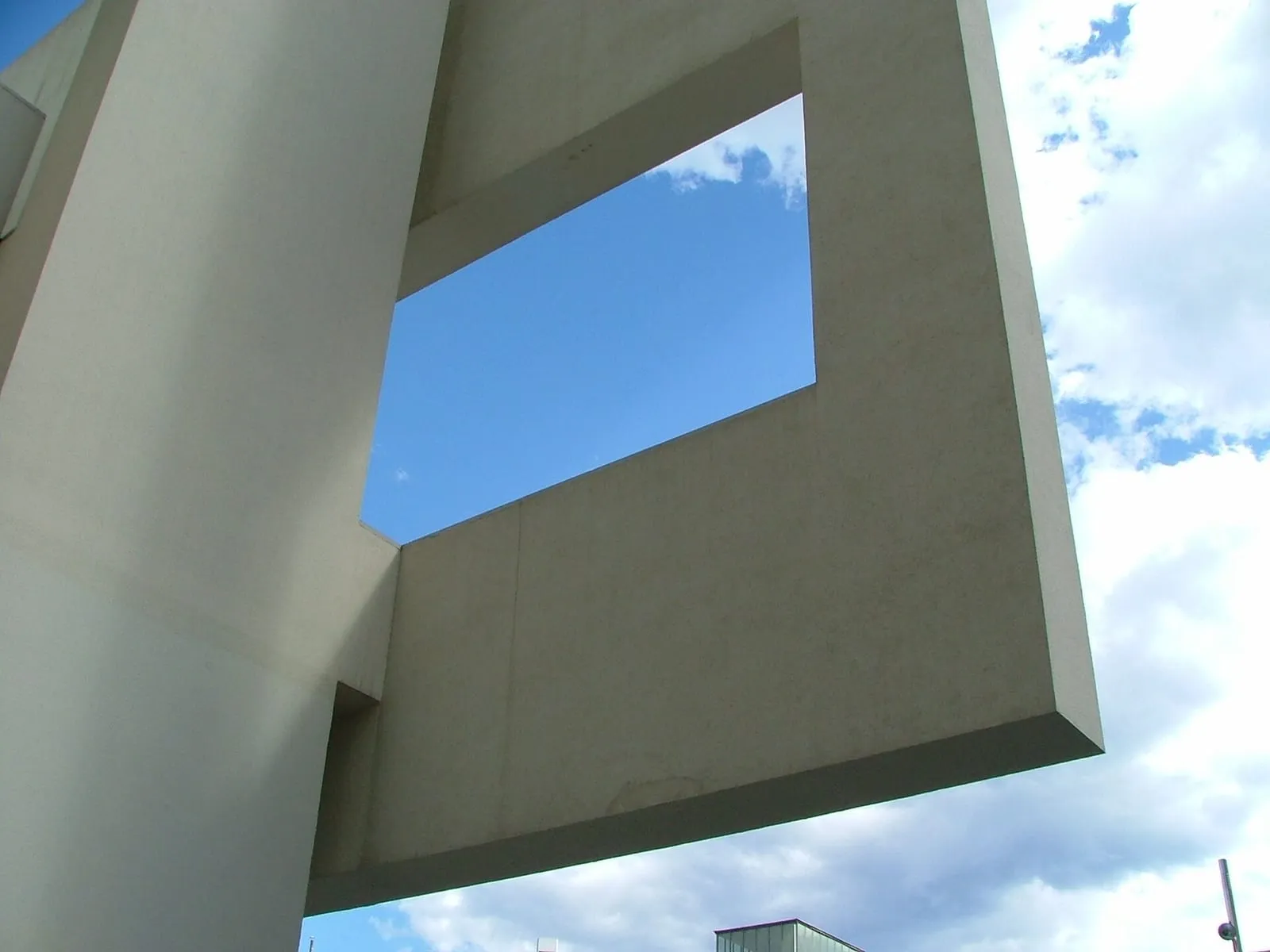 Highly accessible
 One of the best-documented accessible entrances in Europe: a 40 m ramp at 2.5%, a 115 cm clear door width, lifts to every floor and free entry with a companion.
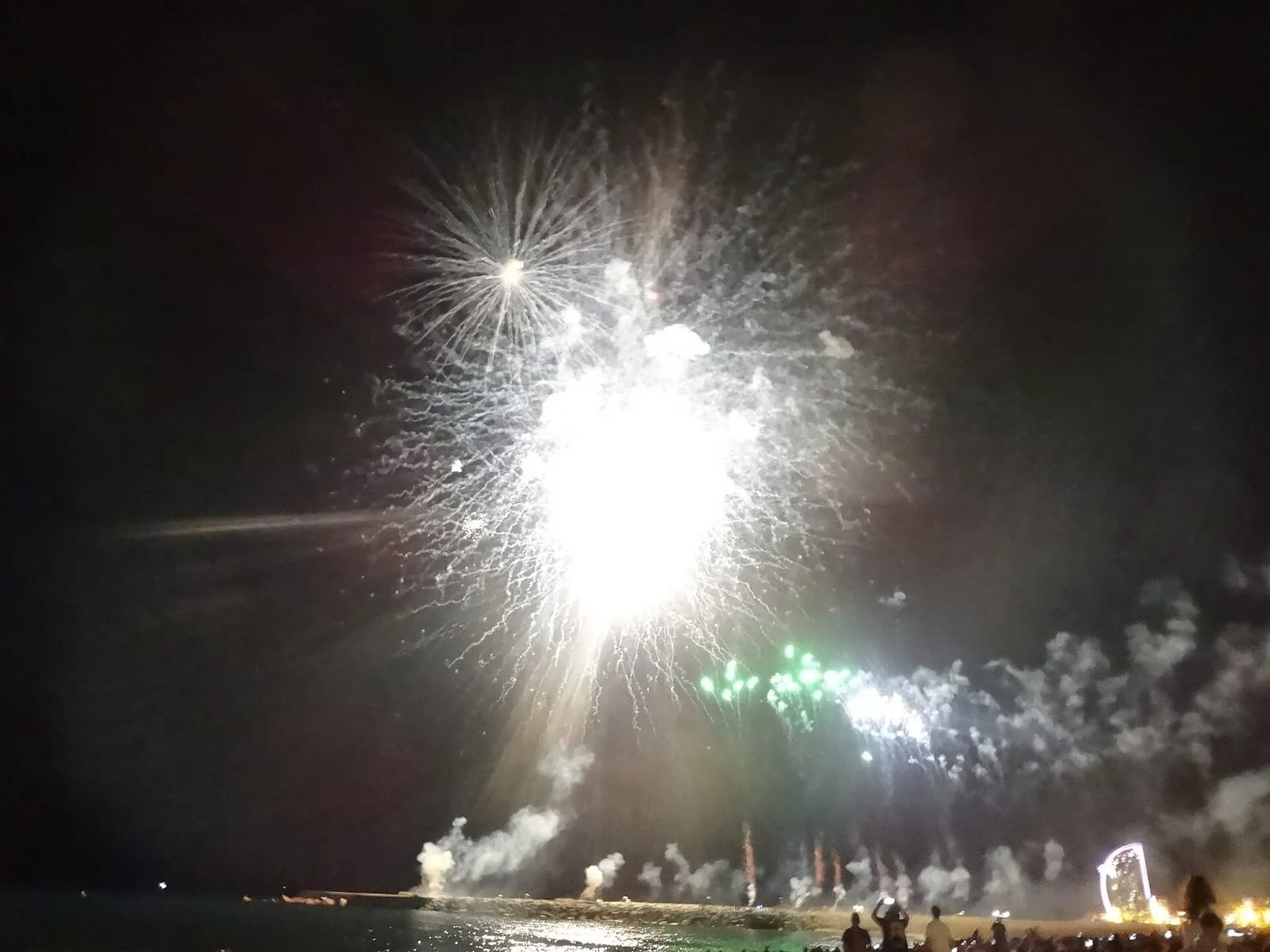 Accessible
 Boardwalks, an inclusive changing room with a hoist and a staffed assisted-bathing service with amphibious chairs — but only in peak season.
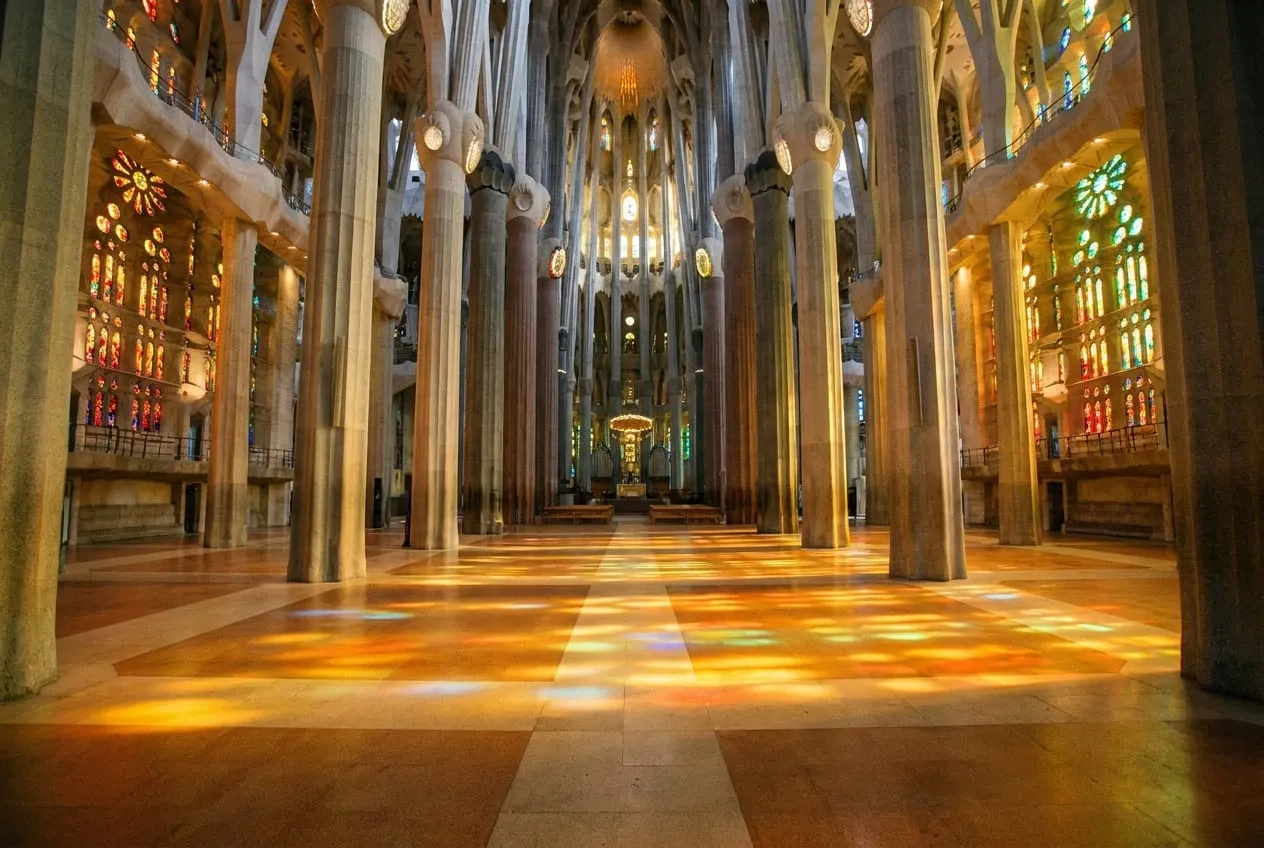 Accessible
 The basilica floor is completely level and unusually spacious; the towers are stairs-only and remain out of reach for wheelchair users.
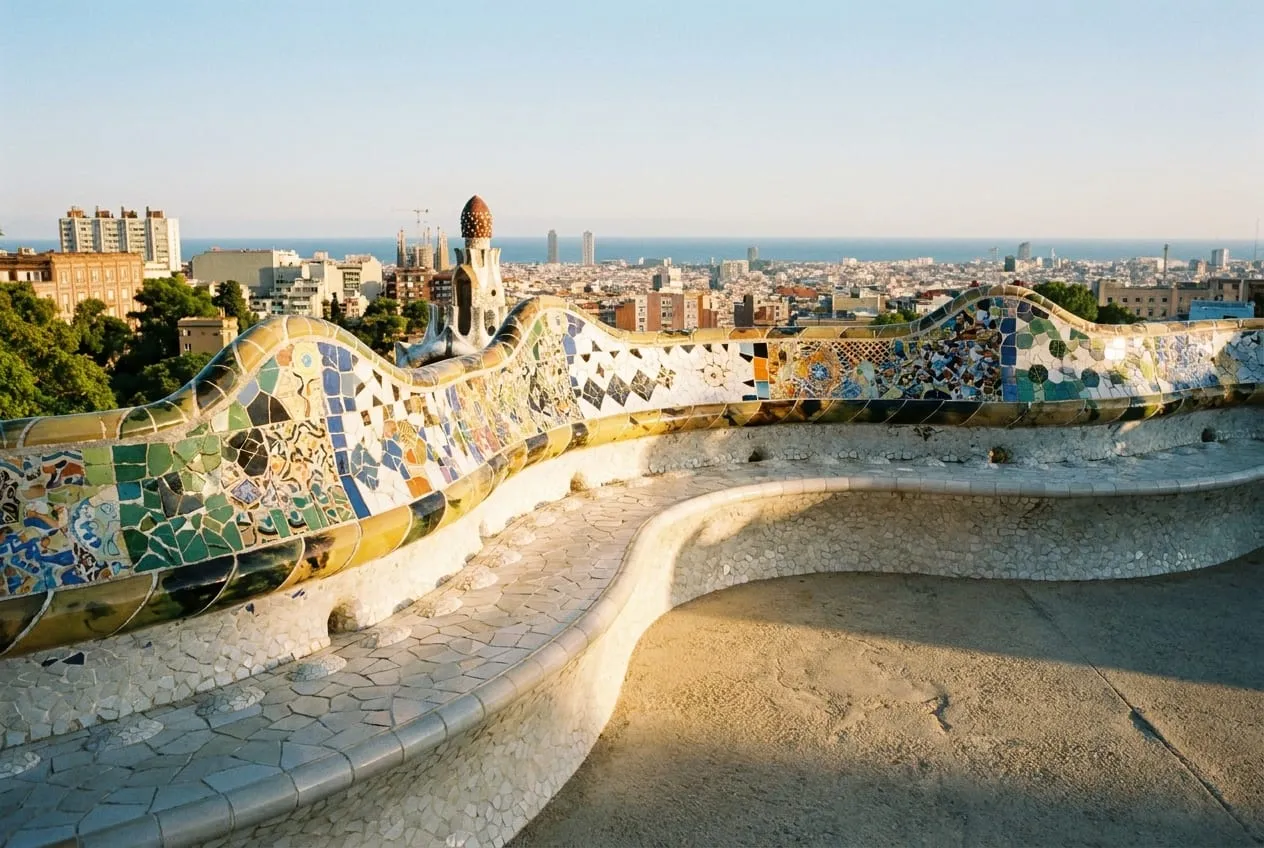 Partial
 Two published step-free itineraries reach the main terrace and Hypostyle Room, but the hillside beyond them is steep and the Dragon Stairway is stairs-only.
Two elevators with priority for disabled visitors reach every floor up to the roof terrace, and the whole house can be visited in a wheelchair.
Lifts and ramps connect the courtyards, the Tenants' Apartment and the attic, but the rooftop is too uneven for wheelchairs and chairs wider than 63 cm need to be arranged in advance.
Getting around: an unusually good metro, with nine gaps
TMB publishes the figure that matters: lifts are installed at 156 of the 165 metro stations, leaving nine that a wheelchair user simply cannot use. The bus network has been fully adapted since 2007 — every vehicle has a ramp, a kneeling suspension, reserved bays and high-contrast interior signage — so where a lift is missing or out of service, the bus above ground is a genuine substitute rather than a consolation.
The nine gaps are worth checking against your route rather than assumed away. Interchanges are the awkward case: at Clot the L2 platforms are reachable by lift and the L1 platforms are not, so a transfer that looks trivial on the map is impossible in a chair. TMB marks its street lifts with NaviLens codes, and the app reads out line, direction and lift status, which is the fastest way to find out whether a lift is working before you commit to a station.
Above ground, the Trambaix and Trambesòs tram lines are fully low-floor with level boarding at every stop. Accessible taxis exist but are a small share of the fleet and generally need to be booked by phone rather than hailed, so allow time. For the airport, the Aerobús coaches carry wheelchairs, and metro L9 Sud serves both terminals with lifts throughout.
Museums and landmarks: free entry, uneven buildings
Free admission for a disabled visitor and a companion is close to standard across Barcelona’s museums, usually on presentation of official documentation — bring proof, because staff do ask for it. MACBA is the clearest success: the way in is a single exterior ramp roughly 40 m long and 4.5 m wide at a 2.5% gradient, leading to a glass door with 115 cm of clear width, with lifts to every floor beyond it.
The Gaudí sites are more mixed, and the honest summary is that the interiors do better than the exteriors. The Sagrada Família nave is completely level and vast; its towers are reached by a lift you can only get to via stairs, and the way down is a spiral staircase, so the towers are out. Park Güell publishes two step-free itineraries through the Monumental Zone, but they deliberately avoid the Dragon Stairway, which means the famous mosaic lizard is not on your route.
Fares, passes and assistance
Published by the operator. Concession rules change, so check before you buy.
- Disabled concession
- Targeta rosa metropolitana / T-metropolitana
- Free or reduced-fare travel, depending on income
- Residents only — not available to visitors
Requires a recognised disability of 33% or more (or age 60+) AND registered residence in a municipality of the Barcelona metropolitan area. Whether you get the free or the reduced-fare version depends on annual income and municipality of registration. Not available to visitors.
Good to know
- TMB issues three variants: the free pink card, the reduced-fare pink card, and a separate T-metropolitana companion pass - check the operator page for the companion pass terms.
- The pink card is valid on the metro, TMB regular bus lines, FGC within the metropolitan fare municipalities, the Tram and other AMB city buses, but not the Aerobús.
Sources: TMB - Targeta rosa metropolitana (retrieved August 10, 2026) · TMB - T-metropolitana companion pass (retrieved August 10, 2026) · TMB - Accessible transport (retrieved August 10, 2026)
Accessibility in Barcelona: common questions
Is the Barcelona metro wheelchair accessible?
Largely yes. TMB reports lifts at 156 of 165 stations, and every bus has been ramp-equipped since 2007. Nine stations remain without lifts, and some interchanges are only partly reachable — at Clot, for example, the L2 platforms have lift access and the L1 platforms do not. Check the station page for live lift status before travelling.
Is Sagrada Família wheelchair accessible?
The basilica interior is, entirely. Use entrance B on Carrer de la Marina, where visitors with reduced mobility get priority access and wheelchairs can be borrowed subject to availability. The towers are not accessible: the tower lift is reached by stairs and the descent is a spiral staircase. Official proof of disability is required for concessions.
Are Barcelona’s beaches wheelchair accessible?
Several are, with reserved parking, wooden walkways towards the water, adapted toilets and staffed assisted bathing points using amphibious chairs and hoists. The staffed points move through the season — Fòrum and Nova Icària at the start, Barceloneta and Bogatell in peak season — and the bathing service must be booked in advance.
What surfaces should wheelchair users expect in Barcelona?
Smooth paving slabs and wide chamfered crossings across the Eixample, with reliable dropped kerbs. In Ciutat Vella expect stone setts, lanes under 200 cm and the occasional single step into premises. Park Güell and Montjuïc add compacted earth and gradients around 10%, though Montjuïc has a step-free funicular and cable car.