Accessible public transport in Prague
How far the step-free network in Prague really reaches, and which of the 2 places we profile you can get to without meeting a step.
- 79% of 61 stations are step-free, per DPP
- Buses are low-floor with ramps across the fleet
- 2 profiled places sit near a step-free station
Prague is the hardest destination in this group, and pretending otherwise does nobody a favour. DPP reports around 48 of 61 metro stations barrier-free and the newest trams are properly low-floor, but the historic core sits on a hill and is paved almost entirely in stone setts. Very little here is impossible. Almost everything needs a route, extra time, and often a second pair of hands.
Places you can reach step-free in Prague
Each profile lists its nearest step-free station and the distance from it.
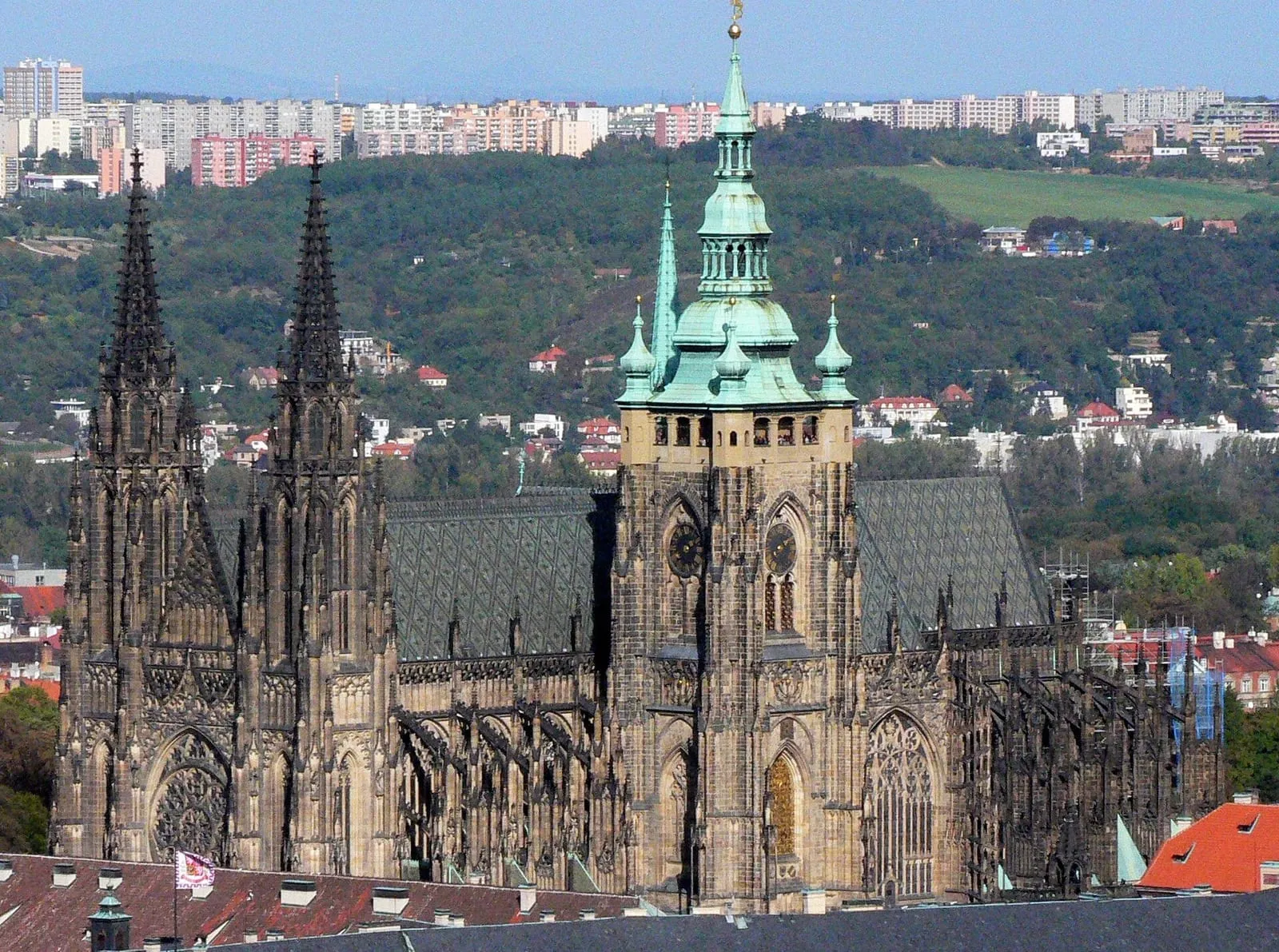 Partial
 Barrier-free entrances to most exhibition buildings and free entry for a wheelchair user and escort, across courtyards of heavy cobble on a hilltop.
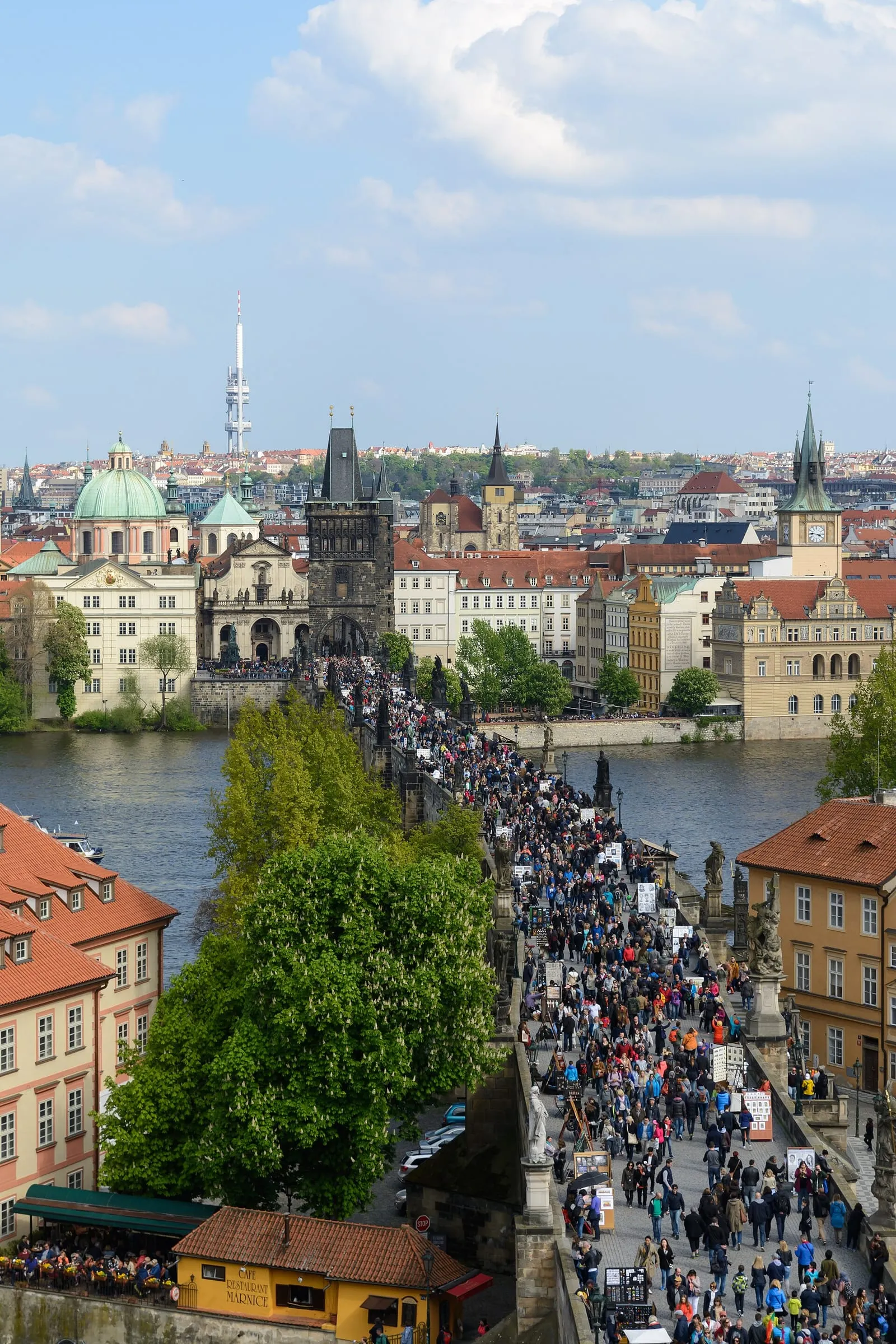 Partial
 No steps and 10 m of width, but a rough sett surface, an arched profile, dense crowds and two towers reachable only by stairs.
Getting around: good metro, variable trams
The metro is the backbone. DPP publishes a barrier-free page listing which stations have lifts and exactly where the entrances are, and roughly 48 of 61 stations qualify. Line C is the strongest, line A the patchiest in the centre — Staroměstská, the obvious stop for the Old Town, has historically had no lift, and its status has been changing as retrofits complete, so check the operator's page on the day rather than trusting a guidebook.
A quirk worth knowing: on line A the train floor sits roughly 5-8 cm above the platform with a similar horizontal gap. It is crossable in most chairs but it is not level boarding, and a powerchair with small front wheels will feel it.
Trams are the key to the hilly left bank, and route 22 to the castle is the single most useful line in the city. The catch is the fleet: newer low-floor cars have a ramp and a wheelchair bay, older high-floor cars have steps. DPP publishes which departures are low-floor, and on route 22 they are a minority rather than the norm.
The castle, the bridge and the old town
Prague Castle publishes a clear and unusually honest position: most visitor and exhibition buildings have barrier-free entrances, with the towers — Daliborka, the White Tower, the Powder Tower and the cathedral's south tower — the treasury exhibition and the defence corridor in the Golden Lane excluded. Entry is free for wheelchair users and an escort. Getting to the gate is the harder half of the problem.
Charles Bridge has no steps and is technically crossable end to end, but the deck is rough stone sett with an arch that rises toward the centre, and both bridge towers are stairs only with no lift. Between 10am and 6pm the crowd density is the real barrier: 10 m of width becomes a metre of usable line.
The Old Town squares are flat but bumpy, and the connecting lanes — Karlova above all — are narrow, cobbled and packed. Josefov and the riverbank embankments are noticeably smoother, and the Náplavka riverside path is the closest thing the centre has to an easy roll.
Fares, passes and assistance
Published by the operator. Concession rules change, so check before you buy.
- Disabled concession
- ZTP / ZTP-P card
- Free travel
- Residents only — not available to visitors
Holders of the Czech ZTP or ZTP/P card travel free of charge in Prague (zones P, 0 and B). These are Czech state-issued cards, so a visitor cannot obtain one.
- Companion travel
- Companion travels free
A companion of a ZTP/P holder travels free, as does a guide dog, provided they are travelling with the holder. Compensation and mobility aids are also carried free.
Good to know
- DPP states that lifts, or cascades of lifts, serve 42 metro stations.
- Three stations - Nové Butovice, Smíchovské nádraží and Strašnická - use inclined stair platforms rather than lifts, intended primarily for wheelchair and pram users.
- Three stations - Depo Hostivař, Rajská zahrada and Vyšehrad - are step-free by construction.
Sources: DPP - Bezbariérové cestování: Metro (retrieved August 10, 2026) · DPP - Obecný popis zařízení pro bezbariérový přístup (retrieved August 10, 2026) · PID - Discounts and free travel (retrieved August 10, 2026)
Accessibility in Prague: common questions
Is Prague wheelchair accessible?
Partly, and it takes planning. The metro is around 48 of 61 stations step-free, newer trams carry ramps, and major sites like Prague Castle publish barrier-free routes. Against that, the historic core is cobbled, hilly and crowded, and several towers and viewpoints have no lift. Expect to plan routes rather than improvise them.
Can you cross Charles Bridge in a wheelchair?
Yes. There are no steps onto or along the deck, and the approaches from both banks are level or gently sloped. The surface is rough stone sett and the bridge arches upward toward the centre, so assistance helps in a manual chair. Both bridge towers are stairs only, with no lift.
What is the accessible way to reach Prague Castle?
Take tram 22 to the Pražský hrad stop and enter via the Powder Bridge into the Second Courtyard. That arrives at castle level and avoids both the Old Castle Stairs and the steep cobbled climb up Nerudova. Confirm a low-floor departure, because route 22 mixes low-floor and stepped vehicles.
Are Prague metro stations step-free?
Most are. DPP lists roughly 48 of 61 stations as barrier-free with lifts, and publishes exactly which street entrance serves the lift. Line A in the centre is the weakest, and Staroměstská for the Old Town has historically lacked one. On line A there is also a 5-8 cm step at the train door.