Accessible travel in Prague
What accessibility actually looks like across 2 of the most-visited places in Prague — measured against one consistent protocol, so the figures are comparable.
- 2 places profiled attribute by attribute
- 0 with a step-free main entrance
- 2 with recorded lift dimensions
- 1 with an accessible toilet
- Average accessibility score of 49/100
Prague is the hardest destination in this group, and pretending otherwise does nobody a favour. DPP reports around 48 of 61 metro stations barrier-free and the newest trams are properly low-floor, but the historic core sits on a hill and is paved almost entirely in stone setts. Very little here is impossible. Almost everything needs a route, extra time, and often a second pair of hands.
Accessible places in Prague
Ranked by accessibility score, which is derived from each recorded profile.
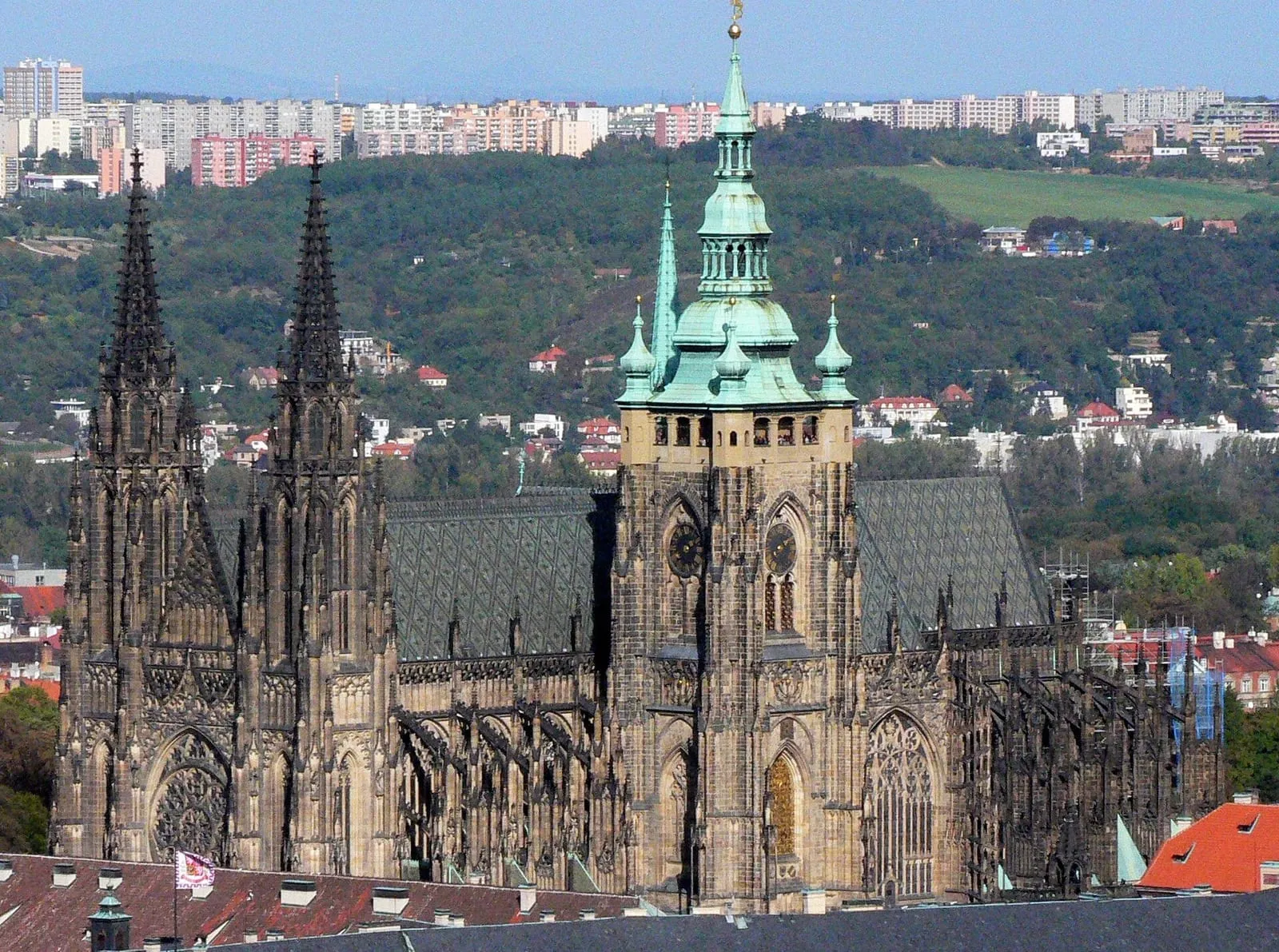 Partial
 Barrier-free entrances to most exhibition buildings and free entry for a wheelchair user and escort, across courtyards of heavy cobble on a hilltop.
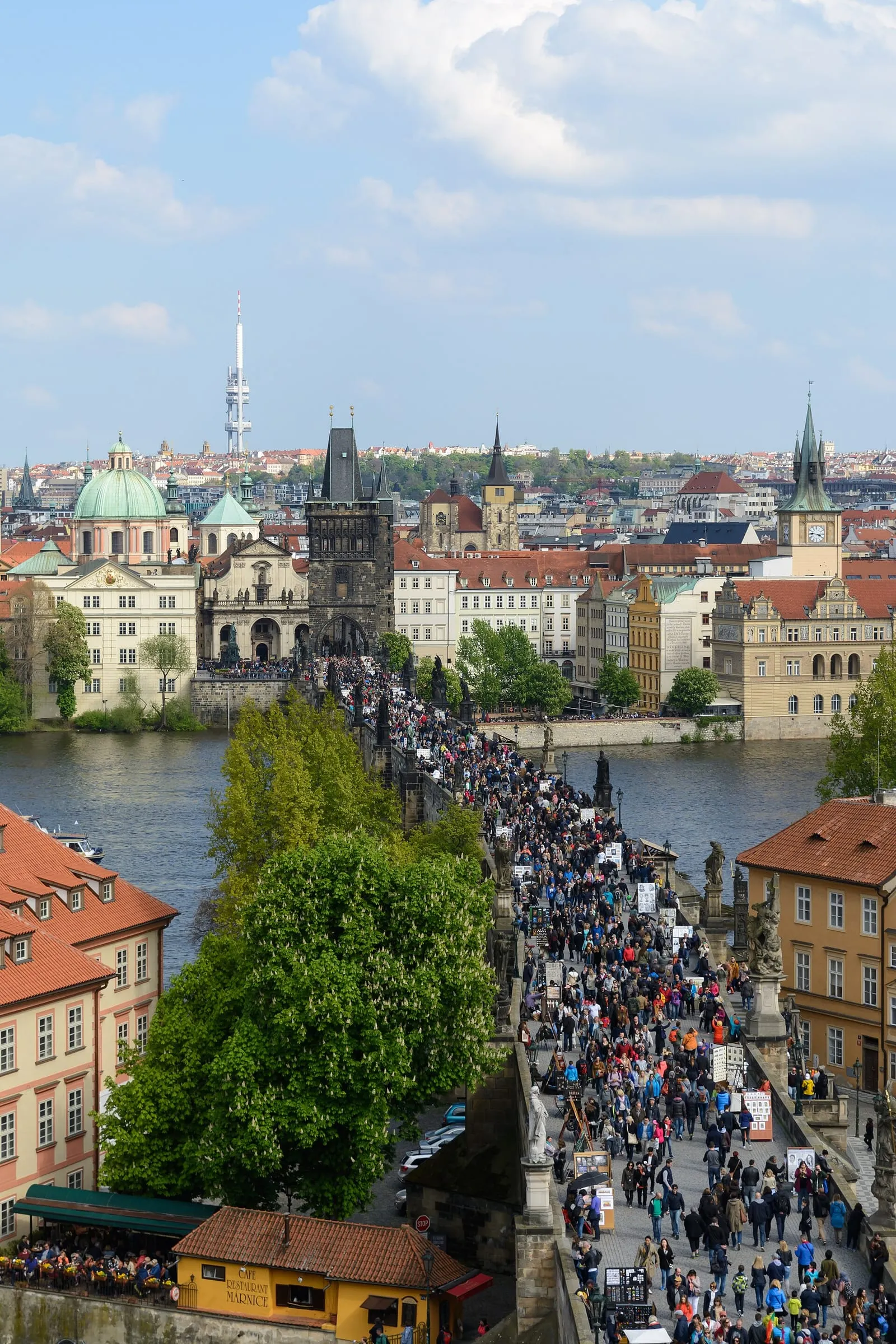 Partial
 No steps and 10 m of width, but a rough sett surface, an arched profile, dense crowds and two towers reachable only by stairs.
The castle, the bridge and the old town
Prague Castle publishes a clear and unusually honest position: most visitor and exhibition buildings have barrier-free entrances, with the towers — Daliborka, the White Tower, the Powder Tower and the cathedral's south tower — the treasury exhibition and the defence corridor in the Golden Lane excluded. Entry is free for wheelchair users and an escort. Getting to the gate is the harder half of the problem.
Charles Bridge has no steps and is technically crossable end to end, but the deck is rough stone sett with an arch that rises toward the centre, and both bridge towers are stairs only with no lift. Between 10am and 6pm the crowd density is the real barrier: 10 m of width becomes a metre of usable line.
The Old Town squares are flat but bumpy, and the connecting lanes — Karlova above all — are narrow, cobbled and packed. Josefov and the riverbank embankments are noticeably smoother, and the Náplavka riverside path is the closest thing the centre has to an easy roll.
Surfaces and terrain: the cobble reality
Prague's historic core is a UNESCO site and its streets are protected, which means the setts stay. They are not uniform: centuries of traffic have polished some to something close to flat, while others are proud, uneven and separated by deep joints. A manual chair with 5-inch castors will find the difference immediately, and the vibration is tiring over an afternoon rather than dangerous in a moment.
The gradients are the second half. Malá Strana climbs from the river to the castle over roughly 70 m of height, and Nerudova — the picturesque way up — reaches gradients that no wheelchair user should attempt. The accessible route is not up the hill at all; it is round it, by tram 22 to the Powder Bridge, arriving at the castle from above.
If you use a manual chair, consider larger front castors or a power-assist wheel for Prague specifically. Several local operators rent power add-ons, and it changes the character of the trip more than any other single decision.
Practical planning
Prague City Tourism runs dedicated accessible-Prague pages covering transport, heritage sites and services, and the city portal publishes a wheelchair guide with route-level detail. Both are more candid than typical tourist-board material and both are worth reading before you book a hotel — staying on the flat right bank near a lift-served metro station removes a daily hill.
Accessible taxis are scarce and must be booked in advance; do not count on flagging one. Many historic buildings have free entry for a wheelchair user and companion, which is partly a compensation for what cannot be reached. Public accessible toilets are thinner on the ground than in Berlin or Vienna, so note the ones at the castle's second courtyard and the Golden Lane exit while you are there.
Accessibility in Prague: common questions
Is Prague wheelchair accessible?
Partly, and it takes planning. The metro is around 48 of 61 stations step-free, newer trams carry ramps, and major sites like Prague Castle publish barrier-free routes. Against that, the historic core is cobbled, hilly and crowded, and several towers and viewpoints have no lift. Expect to plan routes rather than improvise them.
Can you cross Charles Bridge in a wheelchair?
Yes. There are no steps onto or along the deck, and the approaches from both banks are level or gently sloped. The surface is rough stone sett and the bridge arches upward toward the centre, so assistance helps in a manual chair. Both bridge towers are stairs only, with no lift.
What is the accessible way to reach Prague Castle?
Take tram 22 to the Pražský hrad stop and enter via the Powder Bridge into the Second Courtyard. That arrives at castle level and avoids both the Old Castle Stairs and the steep cobbled climb up Nerudova. Confirm a low-floor departure, because route 22 mixes low-floor and stepped vehicles.
Are Prague metro stations step-free?
Most are. DPP lists roughly 48 of 61 stations as barrier-free with lifts, and publishes exactly which street entrance serves the lift. Line A in the centre is the weakest, and Staroměstská for the Old Town has historically lacked one. On line A there is also a 5-8 cm step at the train door.