Accessible public transport in Hong Kong
How far the step-free network in Hong Kong really reaches, and which of the 2 places we profile you can get to without meeting a step.
- 100% of 98 stations are step-free, per MTR
- Buses are low-floor with ramps across the fleet
- 2 profiled places sit near a step-free station
Hong Kong holds two truths at once. The MTR is step-free at all 98 of its stations, with lifts, tactile guide paths and braille as standard, so the underground city is close to seamless. Above it sits a place built on the side of a mountain, where a 200 m journey can involve a 60 m climb, stairs cut into hillsides and pedestrian bridges reached by escalator only. The plan you make determines the day you have.
Places you can reach step-free in Hong Kong
Each profile lists its nearest step-free station and the distance from it.
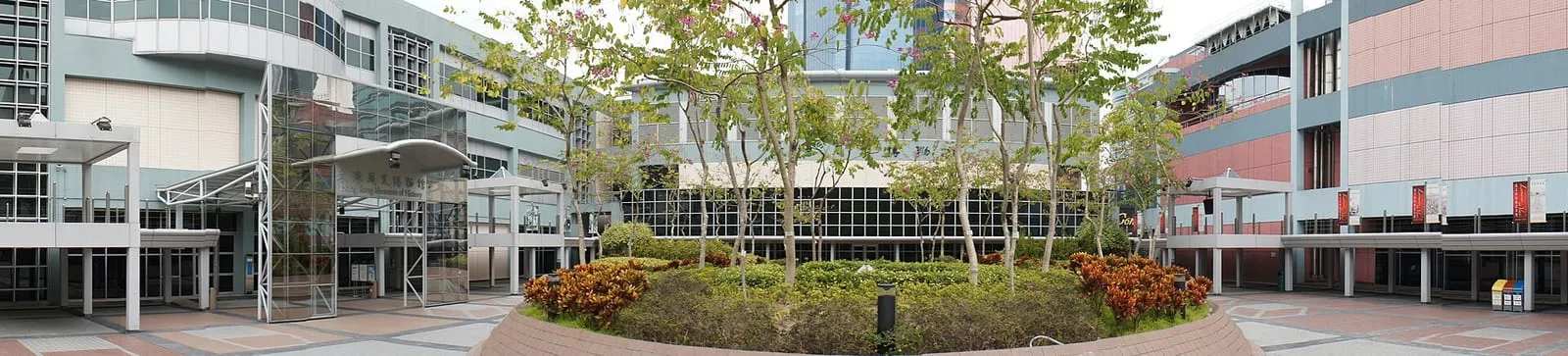 Highly accessible
 Free entry, automatic doors at both lobbies, lifts to the galleries and braille lift buttons — with the revamped "Hong Kong Story" reopened in April 2026.
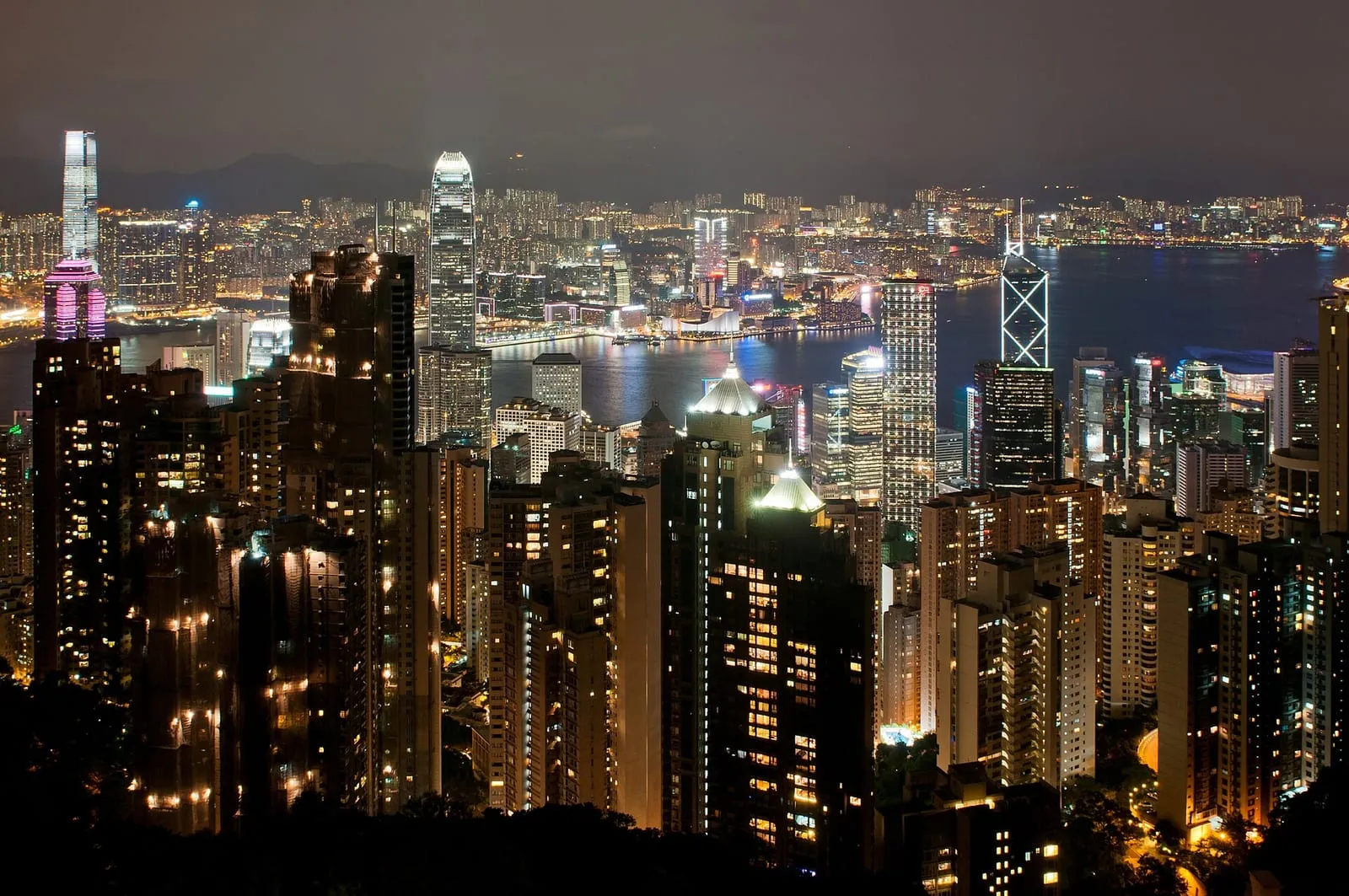 Accessible
 Step-free by bus 15 from Central and fully lift-served once you arrive — but the Peak Tram takes only manual chairs under about 61 cm wide.
Getting around: the MTR carries the city
MTR Corporation reports barrier-free access at every station on the network: lifts from street to concourse to platform, wide gates, tactile guide paths from entrance to platform edge, braille and audible lift announcements, and staff who will accompany you across a gap if asked. Journey times are short and frequencies high. If your itinerary can be drawn between MTR stations, Hong Kong is an easy city.
Franchised buses have moved a long way. Most urban double-deckers are low-floor with a driver-operated ramp and a wheelchair bay, and route 15 from Central up to The Peak is the standard step-free alternative to the Peak Tram. Green and red minibuses, which cover many smaller routes, have steps and no ramp and are not usable in a wheelchair.
Two beloved modes are not accessible. The double-deck trams on Hong Kong Island load through a turnstile and up steps, and the Central-Mid-Levels Escalator is exactly what its name says. Taxis are saloon cars with no ramp fleet; the accessible option is Rehabus, operated by the Hong Kong Society for Rehabilitation, which needs advance booking and is oriented to residents.
Museums and landmarks
Government museums are reliably good, because the Leisure and Cultural Services Department applies one barrier-free standard across the estate. The Hong Kong Museum of History has automatic doors at both lobby entrances, passenger lifts serving the exhibition galleries, lift buttons with braille and audible signals, lowered box office and resource centre counters, an induction loop at the resource centre, and accessible toilets on both lobby levels. Its revamped "Hong Kong Story" permanent exhibition reopened on 1 April 2026 after nearly five years closed.
The Peak Tower and Sky Terrace 428 are fully served by lifts, with accessible toilets, so the viewpoint itself is straightforward once you are up there. The West Kowloon cultural district, including M+ and the Hong Kong Palace Museum, was built recently to a high standard and is reached step-free from Austin and Kowloon stations.
Free or discounted admission for a disabled visitor and a companion is normal at government venues. Sensory provision, by contrast, lags behind physical access: quiet hours, sensory maps and low-stimulus rooms are still uncommon, and audio description is offered occasionally rather than routinely.
Fares, passes and assistance
Published by the operator. Concession rules change, so check before you buy.
- Disabled concession
- Government Public Transport Fare Concession Scheme for Eligible Persons with Disabilities
- HK$2 flat rate or 80% off the adult fare
- Residents only — not available to visitors
Eligible persons with disabilities are Comprehensive Social Security Assistance recipients aged under 65 with 100% disability, and Disability Allowance recipients aged under 65 - both Hong Kong social-welfare categories. You must travel with a registered Personalised Octopus (or JoyYou Card) encoded with "Persons with Disabilities Status". Airport Express, and East Rail Line First Class to and from Lo Wu and Lok Ma Chau, are excluded.
- Booking assistance
- No advance booking scheme published
MTR asks passengers needing assistance to contact station staff. Wheelchair users can summon the Accessible-car service; MTR publishes a maximum wheelchair size of 132 cm high by 66 cm wide by 200 cm long, with a 200 kg maximum load.
Sources: MTR - Facilities for disabled passengers (PDF) (retrieved August 10, 2026) · MTR - Fare concession scheme for eligible persons with disabilities (retrieved August 10, 2026) · MTR - Special schemes (retrieved August 10, 2026)
Accessibility in Hong Kong: common questions
Is the Hong Kong MTR wheelchair accessible?
Yes, across the whole network. MTR Corporation reports barrier-free access at all 98 stations, with lifts from street to platform, wide gates, tactile guide paths, braille lift buttons and audible announcements, and staff assistance on request. It is the most reliable way to move around the city, and generally faster than road transport.
Can wheelchair users take the Peak Tram in Hong Kong?
With limits. The sixth-generation tram removed the step between platform and car and added vertical lifting platforms at both termini, and the cars have marked spaces with safety belts. But the operator states the tram takes manual wheelchairs under about 61 cm wide, so larger chairs and most powerchairs cannot board. Bus 15 from Central is the step-free alternative.
Are Hong Kong taxis and trams accessible?
No. Standard taxis are saloon cars with no ramp, and the Hong Kong Island trams load through a turnstile and up steps. Rehabus, run by the Hong Kong Society for Rehabilitation, is the accessible door-to-door option and requires advance booking. Franchised low-floor buses with ramps are the practical everyday alternative.
How steep are Hong Kong streets for wheelchair users?
Steep enough to change your plans. Gradients over 10% are common in Central, Sheung Wan and Mid-Levels, and some streets are effectively staircases. Kowloon is flat and much easier. The workable tactic on the Island is to ride the MTR or a bus uphill past your destination and travel down rather than up.