Hong Kong Museum of History
Tsim Sha Tsui, Hong Kong · Last verified Jul 2026
Free entry, automatic doors at both lobbies, lifts to the galleries and braille lift buttons — with the revamped "Hong Kong Story" reopened in April 2026.
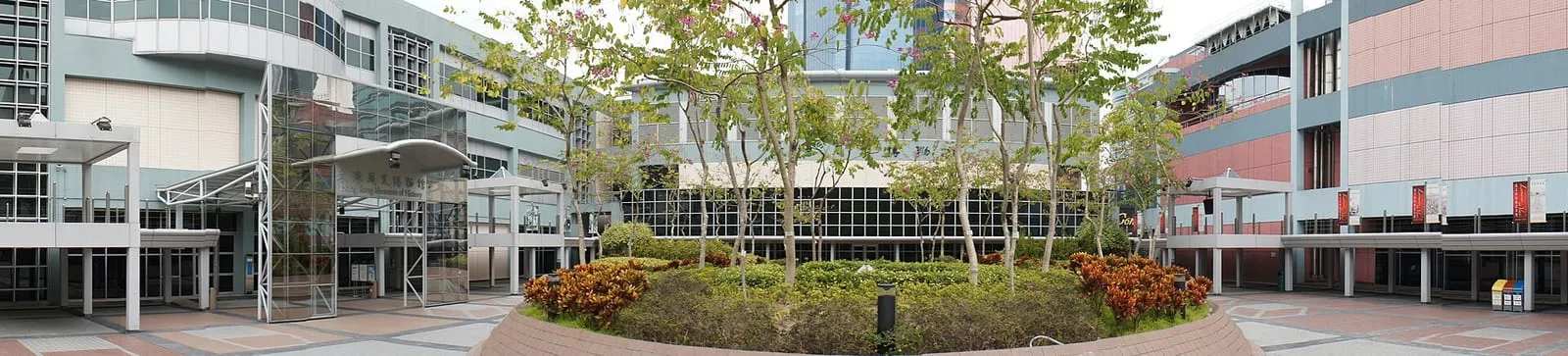
The Hong Kong Museum of History is run by the Leisure and Cultural Services Department, and it applies the government's barrier-free standard consistently rather than partially. Automatic doors serve both the ground floor and first floor entrances, floors are smooth and level with clear widths around 250 cm, and passenger lifts at both lobbies carry visitors to the exhibition galleries. There is no separate accessible entrance to find and no bell to ring.
Detail beyond the basics is what lifts this profile. Lift buttons carry braille and the cars give audible floor announcements, tactile guide paths run through the lobbies, and both the box office and Resource Centre counters are set at heights usable from a wheelchair. The Resource Centre has an induction loop for hearing aid users. Accessible toilets with grab bars and roughly 190 cm of turning space are on both lobby levels. Admission to the permanent galleries is free.
The reason to visit in 2026 is the reopening. "The Hong Kong Story", the museum's main permanent exhibition, closed in 2020 for a full revamp and reopened on 1 April 2026, expanded to ten sections across four themes with around 2,800 objects. Free audio guides are available in Cantonese, Putonghua and English. The redisplay has been widely discussed for its changed framing, including the removal of the colonial governors' portraits and the natural history section, which is worth knowing before you go.
The approach needs a short plan. East Tsim Sha Tsui on the Tuen Ma line is step-free at roughly 700 m, Tsim Sha Tsui on the Tsuen Wan line is step-free at about 850 m, and Hung Hom is a similar distance. All three walks are over flat reclaimed land with wide pavements and dropped kerbs, though Chatham Road South is a busy multi-lane road and the pedestrian crossings are long. Accessible parking is available on site. What the museum does not offer is sensory provision: no quiet hours, no sensory map, and lighting in the galleries is deliberately low in places.
What the measurements mean
The main entrance is step-free. The main door measures 160 cm, which is generous for any wheelchair or mobility scooter. Accessible parking is available on site or immediately adjacent.
The lift cabin is 150 × 180 cm, enough room for a powerchair and a companion together. Its door opening is 110 cm. Internal routes are around 250 cm wide, so two wheelchairs can pass each other.
There is an accessible toilet. Grab bars are fitted. Turning space is about 190 cm, enough for a full turn in most wheelchairs.
Surfaces are smooth & even, which rolls easily. The steepest gradient is around 1%, gentle enough for most users.
The nearest step-free station is East Tsim Sha Tsui on the Tuen Ma line, about 700 m away.
Sensory and communication support includes hearing loop, audio guide, braille signage and tactile paving.
A companion or carer is admitted free. Assistance animals are welcome. Staff are trained to assist. Seating and rest points are available along the route.
What to expect
- Automatic doors at both the ground floor and first floor entrances; no manual doors on the way in.
- Passenger lifts at the G/F and 1/F lobbies serve the exhibition galleries; lift buttons carry braille and audible signals.
- Box office and Resource Centre counters are lowered for seated use, and the Resource Centre has an induction loop.
Getting there step-free
Full accessibility profile
Every attribute below is recorded against the same protocol, so figures are comparable between places. Values are marked Measured or Estimate, and the sources are listed above.Entrance & arrival
Elevators & lifts
Accessible restroom
Surfaces & slopes
Getting there
Sensory & communication
Policies & assistance
Practical tips
- Entry to the permanent galleries is free; special exhibitions may charge, with concessions for disabled visitors.
- The museum names a manager and duty staff with direct phone numbers for accessibility enquiries.
- Weekday mornings are quiet; the reopened Hong Kong Story draws large weekend crowds.
Hong Kong Museum of History: common accessibility questions
Is the Hong Kong Museum of History wheelchair accessible?
Yes. Automatic doors serve both the ground and first floor entrances, passenger lifts at each lobby reach the exhibition galleries, and floors are level and smooth. Accessible toilets with grab bars are on both lobby levels, and the box office and Resource Centre counters are lowered for seated use.
Has the "Hong Kong Story" exhibition reopened?
Yes, on 1 April 2026, after nearly five years closed for revamp. It now runs across ten sections and four themes with roughly 2,800 objects, and free audio guides are offered in Cantonese, Putonghua and English. Entry to the permanent galleries remains free.
What support is there for deaf and blind visitors at the museum?
Lift buttons carry braille codes and the lifts give audible signals, tactile guide paths run through the lobbies, and the Resource Centre has an induction loop for hearing aid users. Free audio guides are available in three languages. Sensory maps and quiet sessions are not offered.