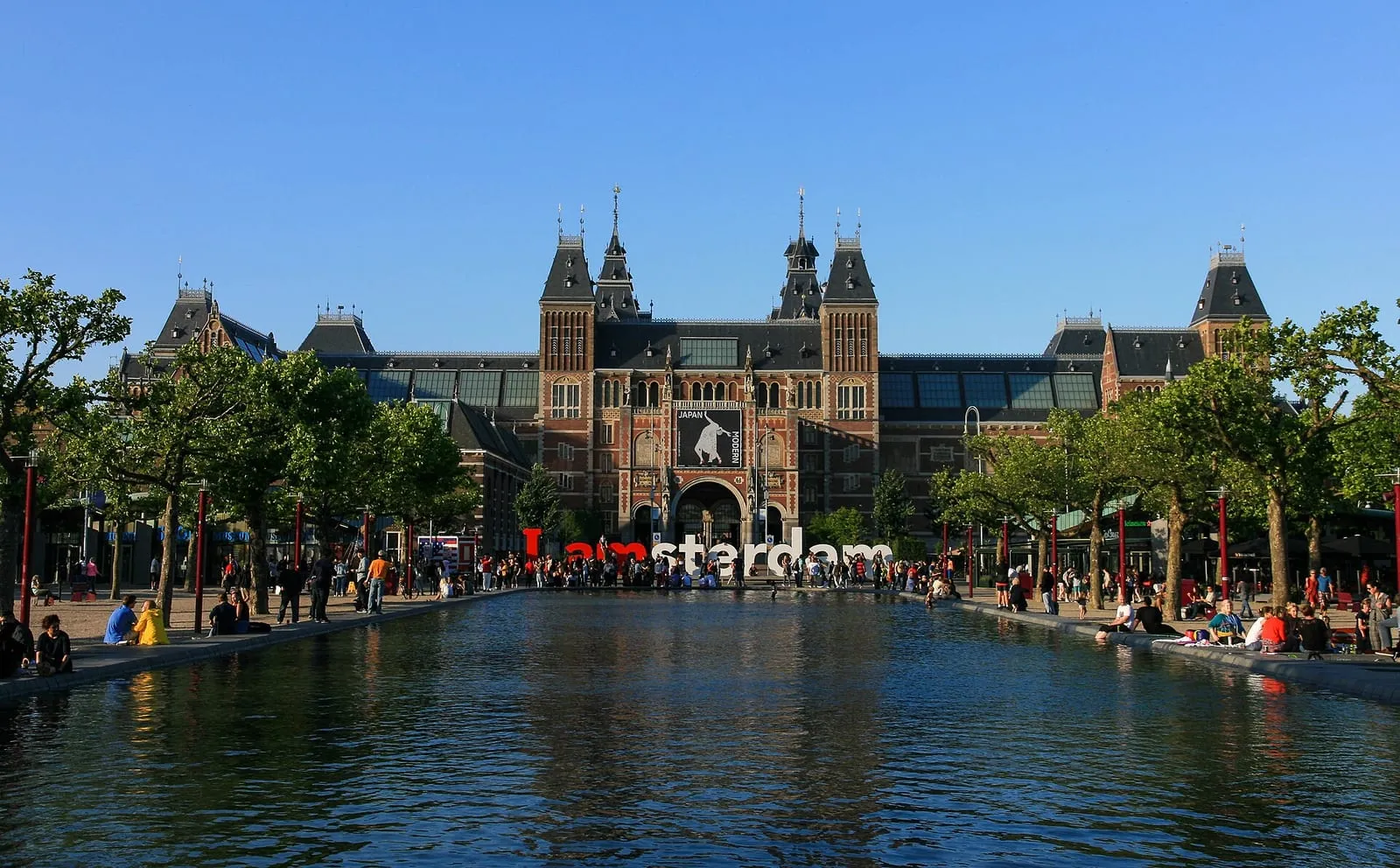
Rijksmuseum
Museumkwartier, Amsterdam · Last verified Jul 2026
Fully navigable by wheelchair or mobility scooter, with lifts to every floor, a hoist-equipped changing room and a quiet room — exceptional by any standard.
The Rijksmuseum states that the entire museum is accessible for wheelchairs and mobility scooters, and the 2013 renovation earned that claim. Lifts serve every floor, there are no dividing bars or thresholds between galleries, and ramps cover the level changes the old building imposed. Clear widths through the main galleries are generous, and the Great Hall and Gallery of Honour are wide enough to hold a crowd without blocking a chair.
Arrival needs one piece of local knowledge. The public entrance drops into the Atrium below ground level, and only one of the three ways in has a lift — the left-hand side as you face the building away from Museumplein. Security staff are briefed to direct wheelchair, rollator and pram users to it, so ask rather than queue at the wrong door. One caveat: the Philips Wing lift takes only smaller mobility scooters.
Facilities go further than most museums. Adapted toilets have low-set basins, and there is a separate changing room with a mobile hoist, a bed and a sink — provision you rarely find outside a dedicated Changing Places facility. The information desk lends wheelchairs, rollators, walking canes and folding museum stools, and hands out a floorplan that marks the lifts, seating areas and accessible toilets. Companions are admitted free, though the complimentary ticket must be reserved in advance.
Sensory support is thoughtful. Quieter galleries are marked in green on the plan, there is a quiet room to withdraw to, and the museum programmes sensory-friendly evenings. The Rijksmuseum app carries audio tours with visual text for deaf and hard-of-hearing visitors, whisper sets are available on guided tours, and touch tours run for blind and partially sighted visitors. Trams 2 and 12 stop about 150 m away at the Rijksmuseum stop; metro 52 at Vijzelgracht is step-free at roughly 900 m.
What the measurements mean
The main entrance is step-free. The main door measures 120 cm, which is generous for any wheelchair or mobility scooter. Accessible parking is available on site or immediately adjacent.
The lift cabin is 150 × 200 cm, enough room for a powerchair and a companion together. Its door opening is 90 cm. Internal routes are around 300 cm wide, so two wheelchairs can pass each other.
There is an accessible toilet. Grab bars are fitted. Turning space is about 190 cm, enough for a full turn in most wheelchairs.
Surfaces are smooth & even, which rolls easily. The steepest gradient is around 0%, gentle enough for most users.
The nearest step-free station is Rijksmuseum on the 2 line, about 150 m away.
Sensory and communication support includes audio guide, captioning, sensory map, quiet hours and low-stimulus room.
A companion or carer is admitted free. Assistance animals are welcome. Staff are trained to assist. Seating and rest points are available along the route. Booking ahead is advisable to secure accessible entry.
What to expect
- Of the three entrances, one has a lift — on the left as you face the building with Museumplein behind you. Security staff will direct you.
- Wheelchairs, rollators, walking canes and folding museum stools are lent free at the information desk.
- Ask for the floorplan marking lifts, seating, accessible toilets and the green-marked quieter galleries.
Getting there step-free
Full accessibility profile
Every attribute below is recorded against the same protocol, so figures are comparable between places. Values are marked Measured or Estimate, and the sources are listed above.Entrance & arrival
Elevators & lifts
Accessible restroom
Surfaces & slopes
Getting there
Sensory & communication
Policies & assistance
Practical tips
- Mobility scooters are welcome but must be driven slowly; the Philips Wing lift only accepts smaller models.
- Reserve the free companion ticket with your own — it is not issued at the door.
- No hearing loop is published; the app’s text-based audio tours and whisper sets are the alternatives.
Practical facilities
Compiled from the venue’s own published accessibility information, not measured by us. Confirm anything critical before you travel.
- Wheelchair loan
- Free
- No booking needed
Wheelchairs, rollators, pushchairs, walking canes and foldable museum stools are borrowed at the information desk.
- Quiet & sensory provision
- Quiet hours: Before 10.00 and after 15.30
- Sensory map
Quieter routes are marked in green on the floorplan and a quiet room is available.
- Arrival & parking
- Drop-off: The access road to the museum is open to pedestrians and cyclists only.
- Accessible parking: Three car parks near the museum offer disabled parking.
The museum names the number of nearby disabled-parking locations but not their bay counts.
Sources: Rijksmuseum — Accessibility (retrieved August 10, 2026)
Rijksmuseum: common accessibility questions
Is the Rijksmuseum wheelchair accessible?
Yes, entirely. The museum states it is accessible throughout for wheelchairs and mobility scooters, with lifts to every floor, no dividing thresholds and ramps where needed. Adapted toilets, a hoist-equipped changing room, and loan wheelchairs, rollators, canes and folding stools are all provided.
Which Rijksmuseum entrance has a lift?
The one on the left as you face the building with Museumplein behind you. The other two entrances have stairs down to the Atrium. Security staff direct visitors with wheelchairs, rollators, walking sticks or prams to the lift entrance.
Does the Rijksmuseum have a quiet room or sensory support?
Yes. Quieter galleries are marked in green on the accessibility floorplan, a quiet room is available, and sensory-friendly evening programmes run periodically. Audio tours with visual text, whisper sets on guided tours and touch tours for blind visitors are also offered.