Accessible public transport in Singapore
How far the step-free network in Singapore really reaches, and which of the 2 places we profile you can get to without meeting a step.
- 100% of 142 stations are step-free, per Land Transport Authority
- Buses are low-floor with ramps across the fleet
- Wheelchair-accessible taxis are available
- 2 profiled places sit near a step-free station
Singapore is the easiest major city in Asia to travel in with a mobility impairment, and one of the easiest anywhere. Every MRT station has a barrier-free route, every public bus is wheelchair accessible, and 98% of bus stops are barrier-free. The built environment was retrofitted deliberately over two decades under a national accessibility code, so lifts, ramps and tactile guidance are the default rather than a concession. Heat, not architecture, is the real planning constraint.
Places you can reach step-free in Singapore
Each profile lists its nearest step-free station and the distance from it.
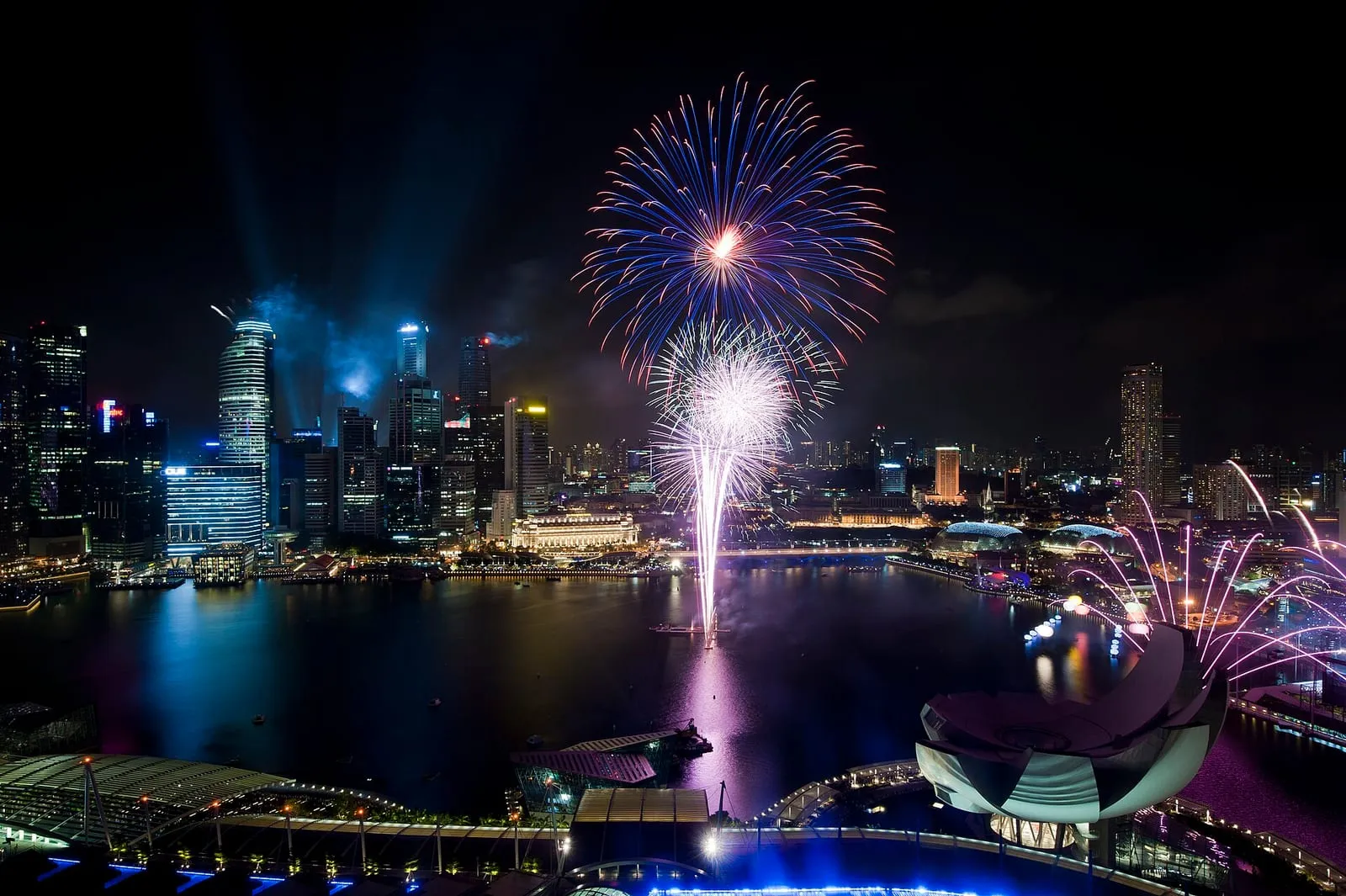 Highly accessible
 Every exhibition space is wheelchair accessible, free wheelchairs at three counters, free entry for a disabled visitor plus caregiver, and per-exhibition access advisories.
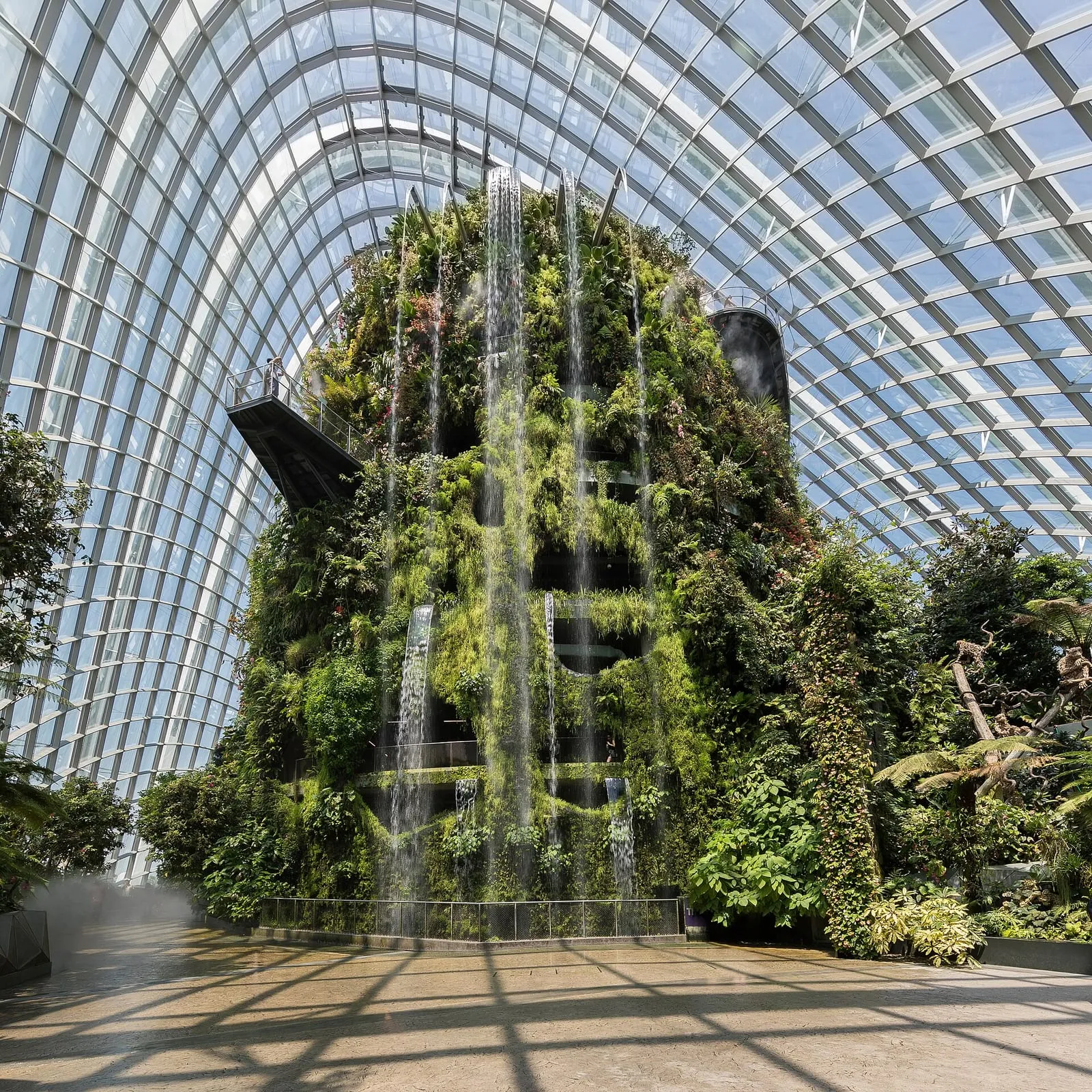 Highly accessible
 A 2012 waterfront garden with smooth 3 m paths, lifts to every level of the Cloud Forest and S$2 wheelchair hire — the constraints are heat and shuttle chair dimensions.
Getting around: the network is the point
The Land Transport Authority states that all MRT and LRT stations have barrier-free access routes and that all public buses are wheelchair accessible. Lifts run from street to concourse to platform, rubber gap fillers plug the space between platform edge and train door, and priority queue zones with seating sit beside the normal boarding queues. In practice you can plan a day on the MRT without checking station by station, which is rare.
Buses fill the gaps well. Each has a ramp the driver deploys and a wheelchair bay with a restraint, and 98% of bus stops are barrier-free — the exceptions are a handful constrained by site geometry, and the LTA marks accessible stops with a wheelchair symbol on the stop pole and in its MyTransport app.
Wheelchair-accessible taxis exist but the fleet is small, so ride-hailing at random will usually return a saloon car. Book a wheelchair-accessible vehicle ahead through a dispatch operator if you cannot transfer. Station Passenger Service Centres are staffed and will help with routing, and staff genuinely do come out from behind the glass.
Museums, gardens and attractions
National Gallery Singapore is the benchmark. Every exhibition space is wheelchair accessible, motorised wheelchairs are permitted in the galleries, wheelchairs are loaned free at three visitor services counters, and admission is free for a visitor with a disability plus one caregiver. The Gallery also publishes per-exhibition access advisories covering lighting levels, sound and floor surfaces, which is a level of detail most museums anywhere do not attempt.
Gardens by the Bay was built in 2012 to modern standards: wide smooth paved paths, lifts to every level of the Cloud Forest, gentle grades inside the Flower Dome, and wheelchair hire for S$2 a day at three counters. The Bayfront shuttle takes wheelchair users free of charge, though only foldable manual or lightweight powered chairs up to 1.2 × 0.7 × 1.5 m.
Sensory provision is patchier than physical access. Several national museums run quiet sessions and publish social stories, but this is venue by venue rather than city-wide, and outdoor attractions rarely offer a sensory map or a designated low-stimulus space. Check the specific venue rather than assuming the standard holds.
Fares, passes and assistance
Published by the operator. Concession rules change, so check before you buy.
- Disabled concession
- Persons with Disabilities (PWD) Concession Card
- Up to 55% off adult fares
- Residents only — not available to visitors
Eligibility is assessed by SG Enable and the card is issued through TransitLink, valid for seven years. Holders pay no additional fare for distances beyond 7.2 km and can buy a monthly concession pass for unlimited travel on train and basic bus services. The assessment-and-issue process means the card is not available to a short-stay visitor.
- Booking assistance
- No advance booking scheme published
LTA states that station staff and service ambassadors at Passenger Service Centres are ready to lend a hand.
Good to know
- LTA states that all MRT and LRT stations are barrier-free, and that every MRT station has at least one barrier-free route with a lift.
- Rubber fillers are installed to plug the gap between the platform and the train.
- Tactile paving at MRT stations and bus interchanges leads to lifts, platforms, toilets and entrances; newer Thomson-East Coast Line stations add braille and embossed text on stair and ramp handrails.
- A Hearing Enhancement System is installed at all Thomson-East Coast Line MRT stations.
Sources: LTA - An inclusive public transport system (retrieved August 10, 2026) · TransitLink - Persons with Disabilities Concession Card (retrieved August 10, 2026)
Accessibility in Singapore: common questions
Is Singapore wheelchair accessible?
More than almost any city in Asia. The Land Transport Authority states that all MRT and LRT stations have barrier-free access routes, all public buses are wheelchair accessible, and 98% of bus stops are barrier-free. Pavements are smooth with near-universal dropped kerbs, and lifts and ramps are standard in public buildings.
Is the Singapore MRT accessible for wheelchair users?
Yes. Every station has a barrier-free route from street to platform via lifts, rubber fillers reduce the platform-to-train gap, and priority queue zones with seating sit beside standard queues. Passenger Service Centres are staffed and will assist. Plan for occasional lift maintenance closures, which are announced on the day.
How do you cope with the heat in Singapore in a wheelchair?
Route through shelter rather than around it. Covered walkways connect MRT stations to nearby buildings, and sheltered links such as the Art Connector reach major venues directly. Schedule outdoor time before 10:00 or after 17:00, carry more water than feels necessary, and treat air-conditioned malls as legitimate parts of a route.
Are Singapore museums free for disabled visitors?
Several national institutions, including National Gallery Singapore, admit a visitor with a disability and one accompanying caregiver free of charge. Commercial attractions more often offer a partial discount instead. Documentation is usually requested at the counter, so carry it rather than relying on an online booking to record the concession.