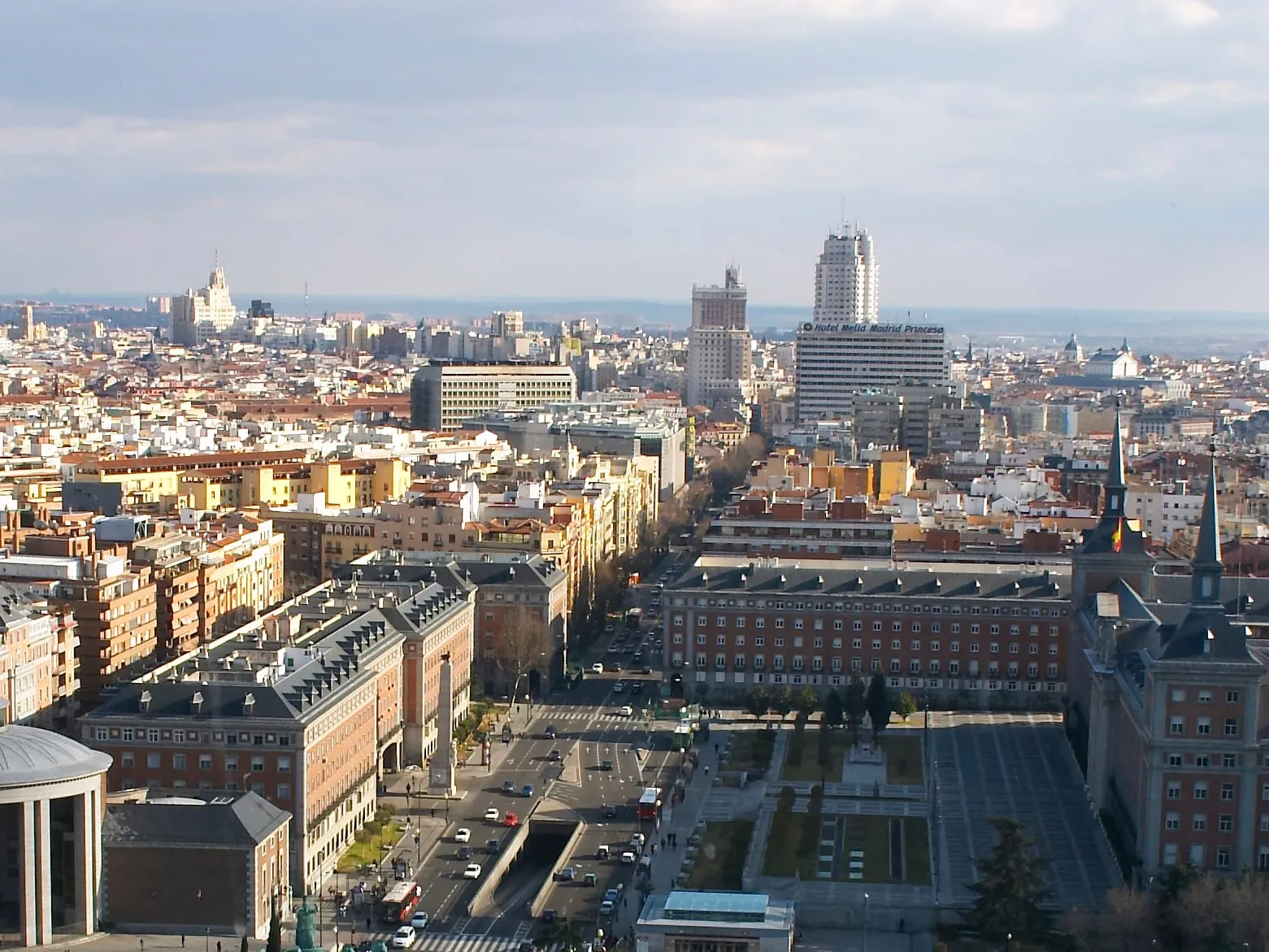
Madrid
World-class galleries, a metro that lets them down
Madrid’s great museums sit within a fifteen-minute roll of each other along the Paseo del Prado, all three are level inside, and all three admit disabled visitors free. The problem is underground. Roughly 70% of Metro de Madrid stations are accessible, but the three closest to the art triangle — Banco de España, Estación del Arte and Retiro — have neither lifts nor escalators. In Madrid you plan by bus.
Accessible places in Madrid
Each profile records door widths, lift dimensions, slopes, surfaces and sensory support — with its sources.
 Accessible
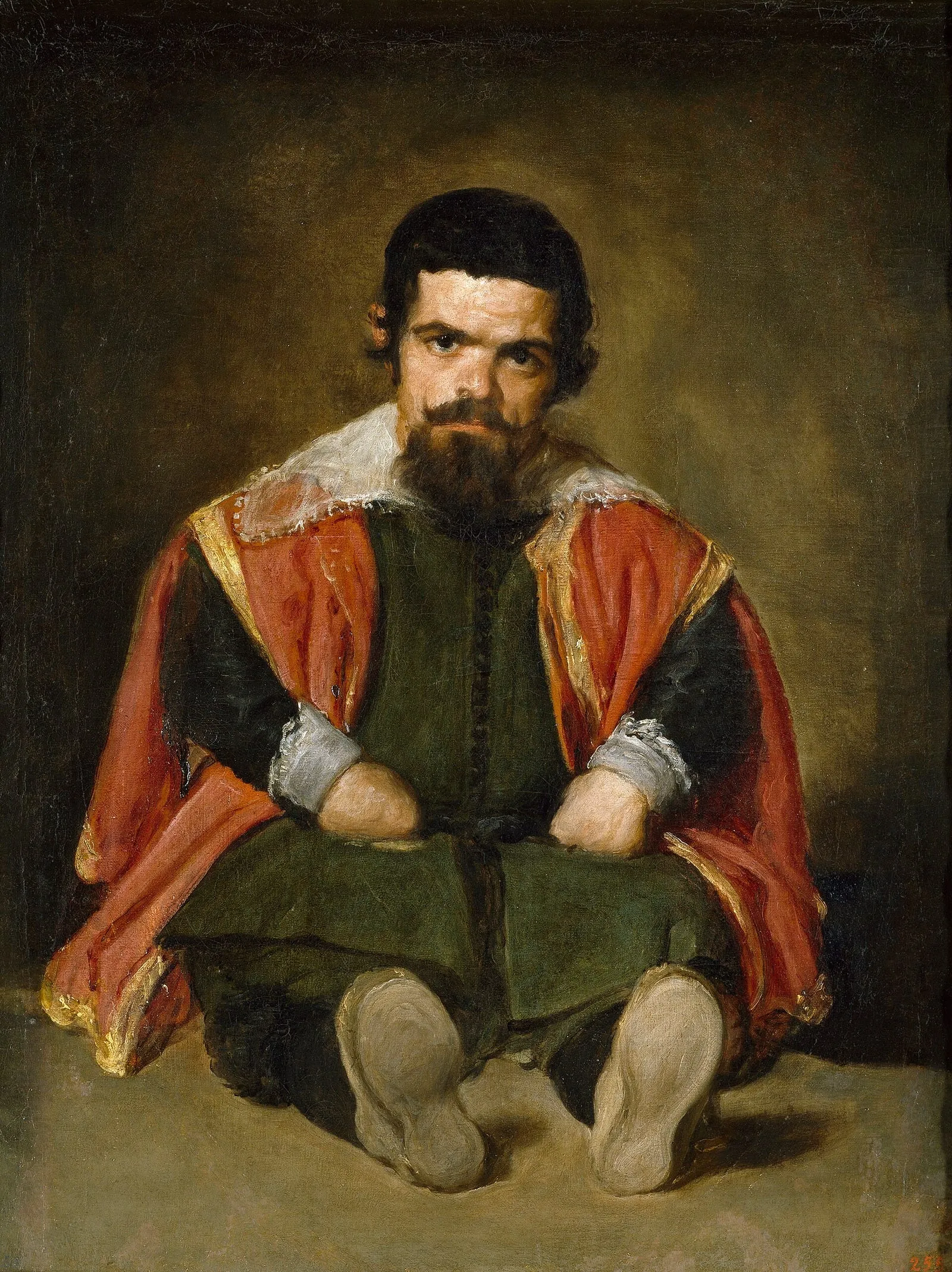
 Level entry via the Jerónimos building, free admission for disabled visitors and exceptional tactile provision — but no step-free metro station nearby.
 Accessible
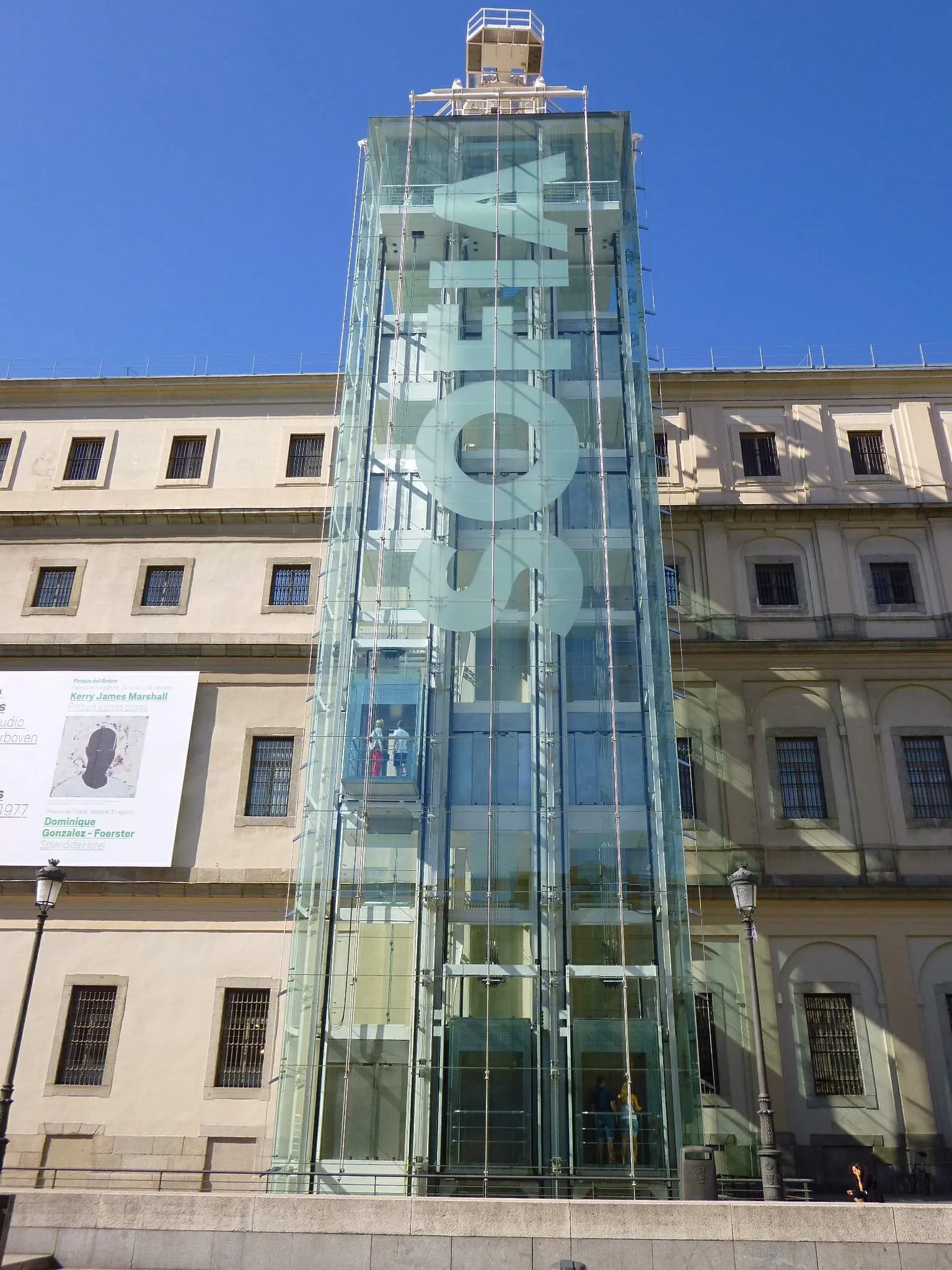
 Practically every public area is reachable, with the Sabatini entrance and exterior glass lifts doing the work — the nearest metro station, though, has no lift.
 Partial
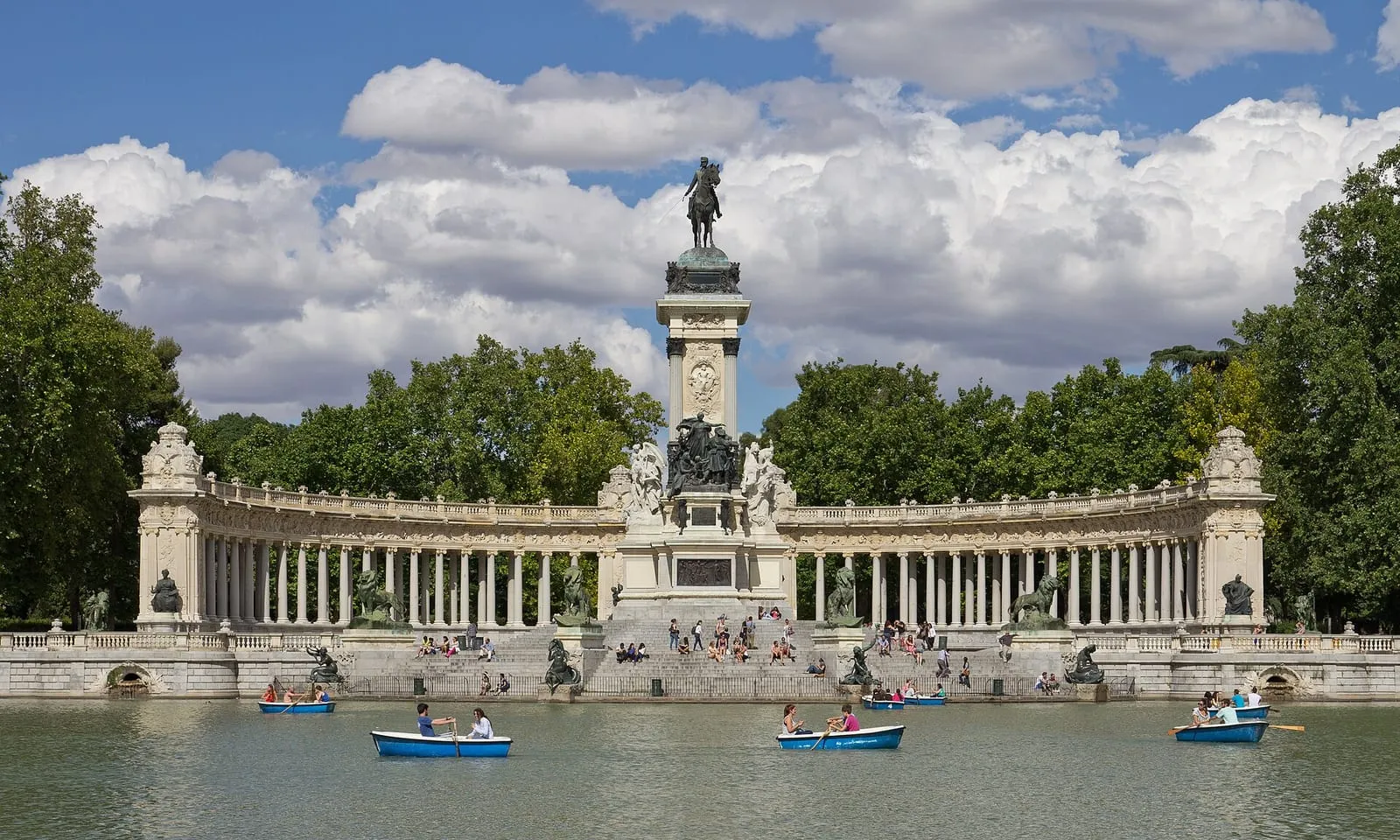
 Wide paved avenues, ramped palaces and an adapted boat pier — but gravel side paths, real gradients and a metro station with no lift.
Getting around: the bus network is the accessible network
Metro de Madrid runs 565 lifts and about seven stations in ten are accessible, which sounds encouraging until you look at where the gaps fall. The Accessibility Plan lists Banco de España, Estación del Arte and Retiro among the stations still to be fitted, and those are precisely the stops a visitor heads for. Atocha on L1 and Príncipe de Vergara on L2/L9 are step-free and become the workarounds.
The EMT bus fleet is the reliable answer. Buses are low-floor with ramps and kneeling suspension, announcements are visual and audible, and the lines along the Paseo del Prado — among them 9, 10, 14, 27 and 34 — drop you within 100 m of the Prado and Reina Sofía entrances. A bus journey that looks slower on paper is usually the faster door-to-door option in a wheelchair.
Cercanías commuter rail is the other useful layer, and one visitors overlook. Madrid Atocha is step-free with staffed assistance, and from its concourse the Paseo del Prado is a level 500–900 m roll to Reina Sofía and the Prado respectively. Accessible taxis, the so-called eurotaxis, operate across the city but are a small minority of the fleet, so book by phone in advance rather than expecting to hail one at a rank.
The Paseo del Arte: level galleries, free entry
The three national collections are properly done inside. The Prado routes accessible arrivals through the Jerónimos entrance with priority at ticket offices 1 and 2, and combines lifts, ramps and platforms to reach every gallery; Reina Sofía uses the Sabatini building entrance and its external glass lift towers to reach practically every public area. Both admit visitors with a disability free of charge.
Sensory and cognitive provision is stronger here than in most European capitals. The Prado publishes easy-reading content and accessible floor plans, produces adapted brochures, and offers Spanish sign language guides, audio description and tactile publications including a tactile version of Las Meninas. Reina Sofía lends folding cane seats alongside wheelchairs, publishes braille brochures, and runs tactile and descriptive tours of selected works with support from the ONCE Foundation.
Both museums ask you to arrange access needs by email rather than through the standard booking flow — accesibilidad@museodelprado.es and accesibilidad@museoreinasofia.es. That is where timed entry, guided support and vehicle drop-off inside the Prado precinct all get confirmed, and it is worth doing a week ahead rather than on the day, since the sign language and tactile visits run to a schedule rather than on demand.
Streets, gradients and heat
Central Madrid has wide, well-maintained pavements and reliable dropped kerbs along the main axes: Gran Vía, Calle de Alcalá, the Paseo del Prado and the pedestrianised stretch of Calle Arenal all roll easily, with crossings that line up on both sides. Granite paving slabs are the norm rather than setts, which makes for far less vibration than Barcelona’s old town or Amsterdam’s canal streets.
The city is not flat, though, and the maps disguise it. Madrid sits on a slope falling towards the Manzanares, and the descent from Sol towards Plaza de España, or from Puerta de Alcalá down into Retiro, produces sustained gradients of around 6% that are pleasant one way and hard work the other. La Latina and Lavapiés are steeper again, with short pitches that need momentum, and their older streets keep granite setts.
Summer heat shapes everything else. July and August frequently pass 35 °C with very low humidity and very little shade between buildings, and the Paseo del Prado is exposed for most of its length with few sheltered places to stop. The museums open early and stay cool all day, so plan the outdoor half of a day before noon or after seven and use the galleries for the hours in between.
Practical planning
Free admission for disabled visitors is widespread across Madrid but conditional on documentation, and the condition is enforced. Bring a national disability card, an EU disability card or an official certificate: staff at the Prado, Reina Sofía and the Thyssen all ask to see it before issuing the concession, and a doctor’s letter or a blue badge from another country is not usually accepted in its place.
Retiro Park is the outdoor centrepiece and it needs route planning rather than avoidance. Its main avenues are broad, paved and benched, the Crystal Palace and Velázquez Palace both have ramped entries, and the lake’s pier, solar boat and two of the rowing boats are adapted for wheelchair boarding. The woodland side paths, by contrast, are compacted earth with embedded stones and gravel, and are hard going in a manual chair.
One quirk of the metro is worth knowing even if you cannot use most of it: where a station is accessible, it tends to be accessible properly — lifts run all the way from street to platform, and platform-to-train gaps are small. That changes how you plan. A route using two step-free stations with a low-floor bus stitched in between will usually beat a direct line that forces an interchange at a stairs-only station.
When to go for easier access
April to early June and late September to November are the comfortable windows. Avoid mid-July to August, when afternoon temperatures above 35 °C make outdoor distances genuinely risky for anyone with limited thermoregulation, and many smaller venues cut their hours.
Fares, passes and assistance
Published by the operator. Concession rules change, so check before you buy.
- Disabled concession
- Abono Transportes para personas con discapacidad (CRTM)
- 20% additional reduction on the 30-day Abono Transportes
- Residents only — not available to visitors
For users with a recognised disability of 65% or more. It must be loaded onto a personalised Tarjeta de Transporte Público carrying the disability discount, issued against Spanish disability documentation - so it is not obtainable by a visitor. The discount can be combined with other entitlements such as large-family status.
- Booking assistance
- No advance booking scheme published
Metro de Madrid operates a Special Assistance Service using staff and equipment at stations where a wheelchair user needs help to leave the station. It runs throughout operating hours, 06:00-01:30. Lift status can be checked in advance on the Metro de Madrid website and apps, or by phoning the CIAC customer line on +34 900 444 404 (07:00-23:00).
Good to know
- Metro de Madrid publishes 559 lifts and 1,710 escalators across its 301 stations.
- Not every station is fully accessible: the Accessibility and Inclusion Plan 2021-2028 is adding 103 new lifts, which will bring 28 more stations into the fully accessible list. Check your specific origin and destination.
Sources: Metro de Madrid - Accessibility (retrieved August 10, 2026) · Metro de Madrid - Discapacidad abono (retrieved August 10, 2026) · CRTM - Abono personas con discapacidad (retrieved August 10, 2026)
Accessibility in Madrid: common questions
Is the Madrid metro wheelchair accessible?
Partly. About 70% of stations are accessible and the network runs 565 lifts, but coverage is patchy in the historic centre. Banco de España, Estación del Arte and Retiro — the stations nearest the main museums and the park — have no lifts or escalators. Atocha and Príncipe de Vergara are step-free alternatives.
Is the Prado Museum wheelchair accessible?
Yes. Arrive at the Jerónimos entrance, where accessible access and priority at ticket offices 1 and 2 are provided, and lifts, ramps and platforms reach the galleries. Admission is free for visitors with a disability on presentation of documentation. Arrange timed entry and any vehicle drop-off in advance via accesibilidad@museodelprado.es.
Are Madrid buses wheelchair accessible?
Yes, and they are the most reliable way to move around the centre. The EMT fleet is low-floor with ramps and kneeling suspension, with visual and audible stop announcements. Several lines run the length of the Paseo del Prado and stop within about 100 m of the Prado and Reina Sofía entrances.
Is Retiro Park wheelchair accessible?
On its main avenues, yes — they are paved, up to 4 m wide and lined with benches, with accessible toilets near the principal gates. Side and woodland paths are compacted earth with loose stones. Note that Retiro metro station itself has no lift; use Príncipe de Vergara or Atocha instead.