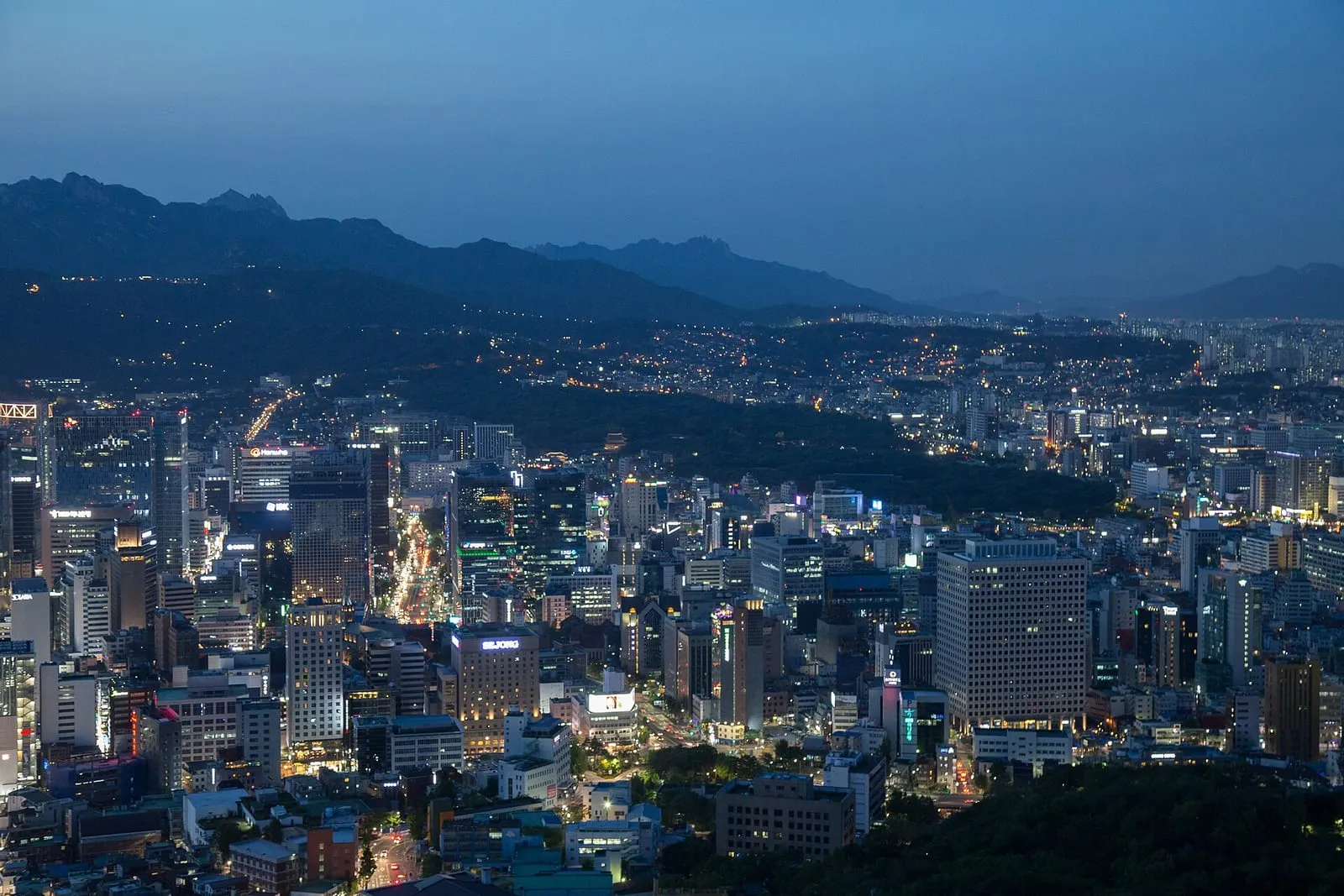
Seoul
Lifts in almost every station, hills in almost every district
Seoul invested heavily and visibly in subway accessibility, and it shows: around 95% of stations inside the city have lift access from street to platform, each train carries marked wheelchair spaces at both ends, and call buttons at entrances summon staff within minutes. The friction lies elsewhere — in the hills the city is built across, in gravel courtyards at the palaces, and in a low-floor bus fleet that is expanding but not yet universal.
Accessible places in Seoul
Each profile records door widths, lift dimensions, slopes, surfaces and sensory support — with its sources.
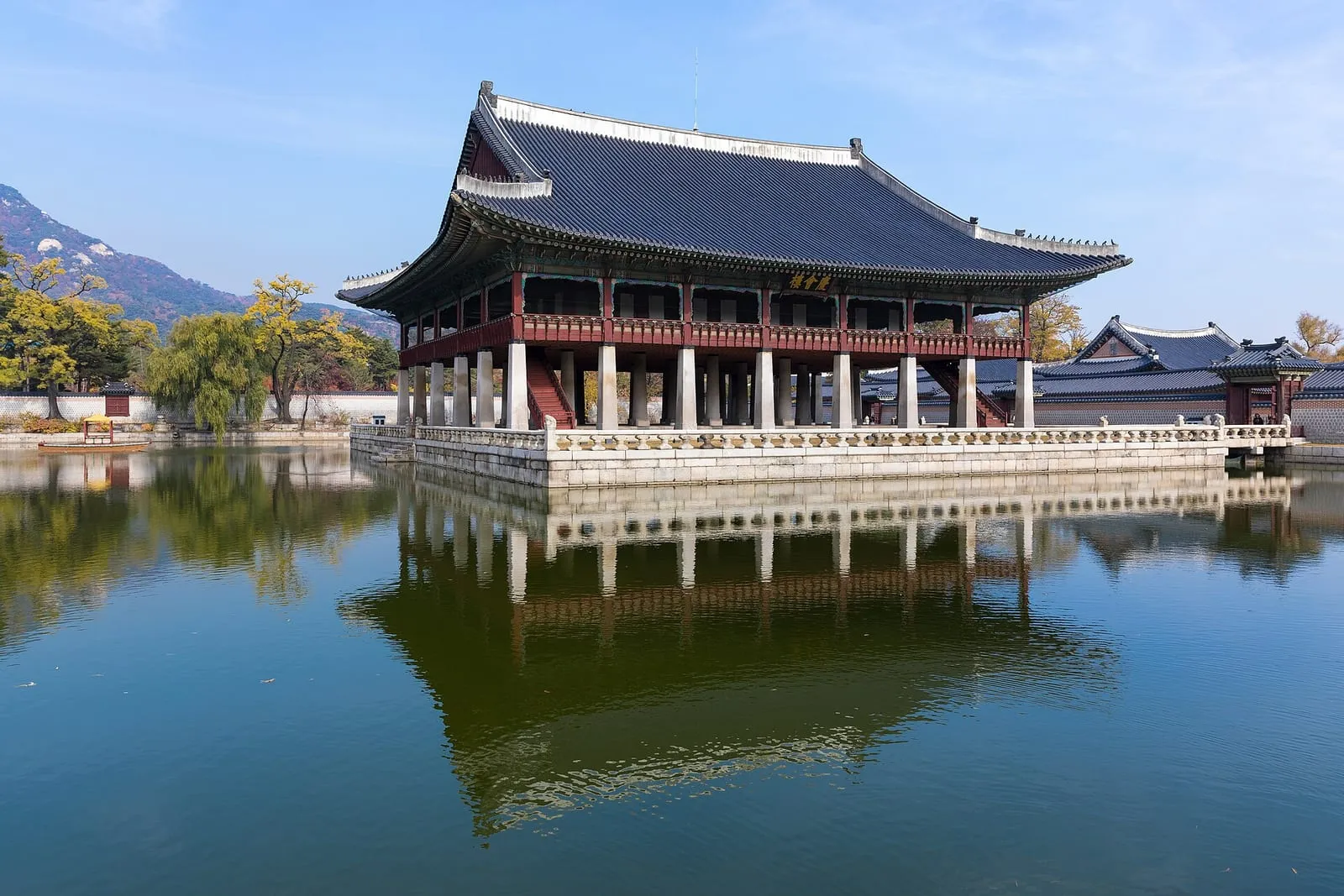 Partial
 Ramps cross the thresholds and free wheelchairs are provided, but the courtyards are coarse gravel and irregular stone, and the historic halls cannot be entered.
 Accessible
 Three architect-designed buildings with lifts to every level and free wheelchair loan — the difficulty is the uphill 450 m from Hangangjin station.
Getting around: subway first, then think
The subway is the backbone. Roughly 95% of stations within Seoul have a lift connecting street level to the platform, and each car has a dedicated wheelchair space at both ends plus priority seating. Where older stations lack a lift, an inclined wheelchair platform lift runs along the staircase; it is slow and requires a staff member, and there is a call button at the entrance to summon one.
Those call buttons deserve a mention. Positioned at station entrances and beside lifts, they connect directly to the nearest staffed office based on your location, and response is usually a few minutes. It removes the main anxiety of an unfamiliar network, which is arriving at an exit and finding stairs with nobody in sight.
Buses are more variable. Low-floor buses with ramps run on many routes and the fleet keeps growing, but coverage is route-dependent rather than universal, so a specific bus number may or may not be accessible. Seoul's call-taxi service for disabled passengers is generally restricted to registered residents, which leaves visitors relying on the subway plus a booked accessible van.
Palaces, museums and galleries
Modern museums are strong. Leeum Museum of Art, the National Museum of Korea and the MMCA all offer step-free entrances, lifts to every level, accessible toilets and free wheelchair loan at the desk, and admission is normally free for a disabled visitor and one companion. Audio guides are widely available in English; captioning and audio description are less consistent.
The royal palaces are the honest exception. Gyeongbokgung has ramps over the low walls and thresholds that run throughout the site, free wheelchair loan, accessible parking and accessible toilets, and staff who will help. But the great courtyards are laid with coarse gravel and irregular stone slabs, several ramps are steep enough to need a push, and the historic buildings themselves cannot be entered because adding ramps would compromise the structures.
That trade-off is worth naming rather than glossing over. At Gyeongbokgung you experience the grounds, the gates and the outside of the halls; the interiors are largely off-limits. The National Folk Museum inside the palace grounds is fully accessible and is the one place on site you can go indoors comfortably.
Hills, gravel and winter
Seoul sits in a basin ringed by mountains, and the city climbs them. Neighbourhoods that look walkable on a map — Bukchon, Ihwa-dong, parts of Itaewon and Hannam-dong — involve sustained gradients of 8-12%, sometimes with stepped sections. Even a short walk from a subway exit to a museum can be a steady climb, as it is from Hangangjin station up to Leeum.
Central surfaces are good: broad pavements, smooth paving slabs, dropped kerbs at essentially every crossing, tactile paving on approaches and audible signals. The exceptions are heritage sites with deliberate gravel or stone, and older market streets such as Gwangjang where pavements narrow and stalls encroach.
Winter is a real access issue rather than a comfort one. Between December and February temperatures sit well below freezing, and compacted snow or black ice on a sloping pavement is genuinely hazardous in a wheelchair or with a walking aid. July and August bring the monsoon and repeated heavy rain instead.
Practical planning
Seoul Danurim, the city government's accessible-tourism site, publishes venue-by-venue barrier-free surveys in English, covering entrances, toilets, parking and slopes. It is the most reliable planning source for the city and is far more specific than general travel guides.
Free admission for a disabled visitor and one companion applies at the royal palaces and most national museums. Bring your documentation; staff generally accept foreign disability cards at these public sites, but the policy is not published in English and is applied at the counter.
Reservations matter at a few venues. Leeum requires advance booking with limited daily capacity and releases slots up to 14 days ahead, so book before you arrive rather than hoping for a walk-up, and mention wheelchair use so staff can meet you at the entrance.
When to go for easier access
Late April to early June and September to October give 15-25°C and low rainfall, the two windows where hills and outdoor sites are comfortable. December to February brings ice on sloping pavements, which is the single biggest seasonal hazard here, and July to August is the monsoon.
Fares, passes and assistance
Published by the operator. Concession rules change, so check before you buy.
- Disabled concession
- Free-ride transport card for registered persons with disabilities
- Free travel
- Residents only — not available to visitors
Seoul issues semi-permanent transport cards to free riders on the Greater Seoul urban railway - registered persons with disabilities, people aged over 65, and persons of national merit. Eligibility rests on Korean disability registration, so a visitor pays standard fares.
- Booking assistance
- No advance booking scheme published
Seoul publishes a call-button service that connects directly to the nearest subway station based on the user location, so station staff can respond quickly.
Good to know
- The Seoul Metropolitan Government reports that lift installation across the Seoul subway is 99.4% complete.
- Seoul operates a call-taxi service for people with severe mobility impairment, but it is limited to registered users.
Sources: Seoul Metropolitan Government - Subway accessibility facilities (retrieved August 10, 2026) · Seoul Metropolitan Government - Mobility support for persons with mobility challenges (retrieved August 10, 2026) · Seoul Metro - Care facilities (retrieved August 10, 2026)
Accessibility in Seoul: common questions
Is the Seoul subway wheelchair accessible?
Largely yes. Around 95% of stations inside Seoul have lift access from street to platform, and trains carry marked wheelchair spaces at both ends of each car. Older stations without a lift use a staff-operated inclined stair lift, and call buttons at entrances connect straight to the nearest station office to summon help.
Is Gyeongbokgung Palace wheelchair accessible?
The grounds are, with caveats; the buildings are not. Ramps cross the thresholds and low walls throughout, and wheelchair loan, accessible parking and accessible toilets are provided. But the main courtyards are coarse gravel and uneven stone, some ramps are steep, and the historic halls cannot be entered. The National Folk Museum on site is fully accessible.
Are Seoul museums free for disabled visitors?
At the royal palaces and most national museums, a visitor with a disability and one accompanying person are admitted free. Foreign disability documentation is generally accepted at these public sites, though the policy is not published in English, so carry your card or certificate and present it at the ticket window.
How hilly is Seoul for wheelchair users?
Hillier than it looks. Gradients of 8-12% are common in Bukchon, Itaewon and Hannam-dong, and even short walks from subway exits can be sustained climbs. Central Jongno and Gangnam are flatter with wide, smooth pavements. In winter, ice on those slopes is the most serious practical hazard in the city.