Vancouver
Probably the easiest city on this site
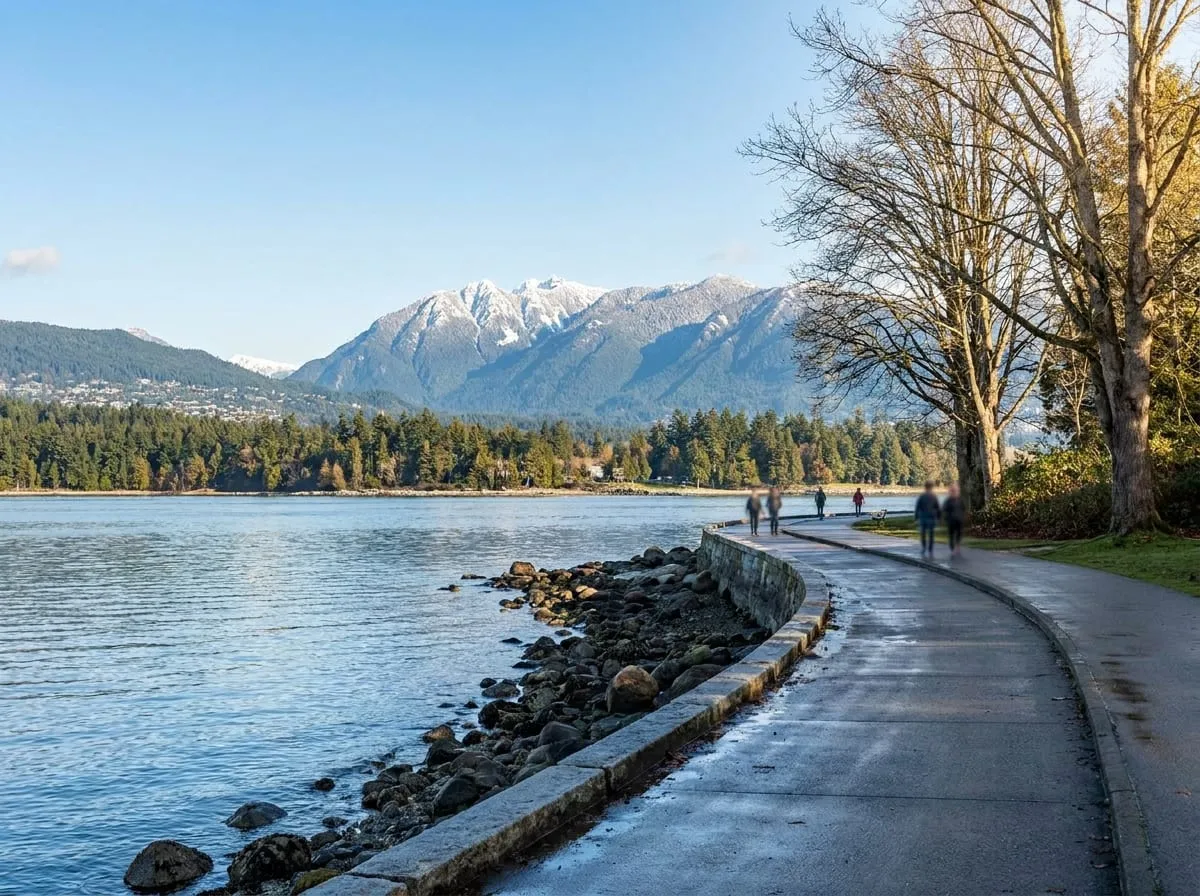
Vancouver is the city where accessibility planning stops feeling like work. Every one of TransLink's 53 SkyTrain stations has lift access, the whole bus fleet is low-floor with ramps, and the seawall gives you 28 km of paved, near-level waterfront path. The city is young, built mostly after modern access codes, and the mountains stay usefully in the background rather than under your wheels.
Accessible places in Vancouver
Each profile records door widths, lift dimensions, slopes, surfaces and sensory support — with its sources.
 Highly accessible
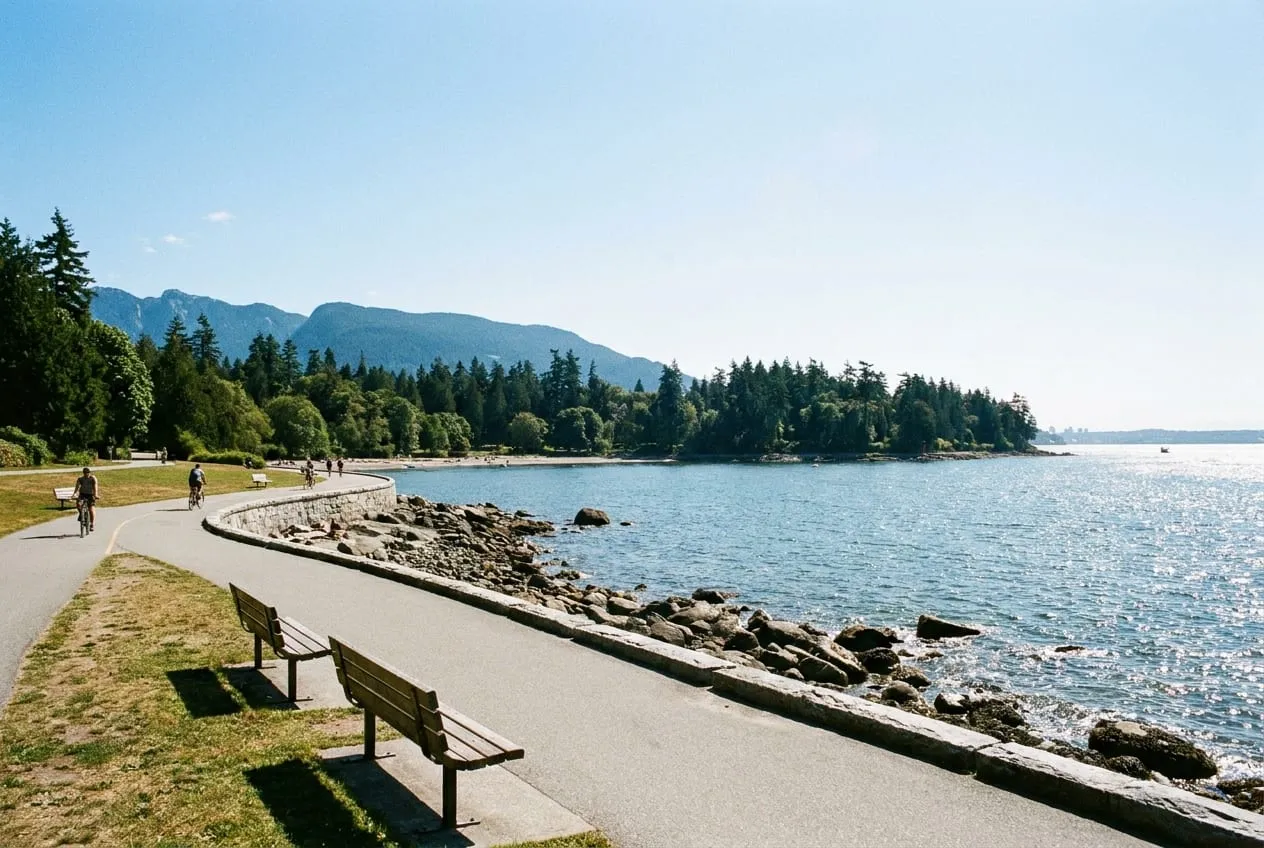
 Around 28 km of paved, near-level waterfront path, with the 8.8 km Stanley Park loop as its signature stretch.
 Accessible
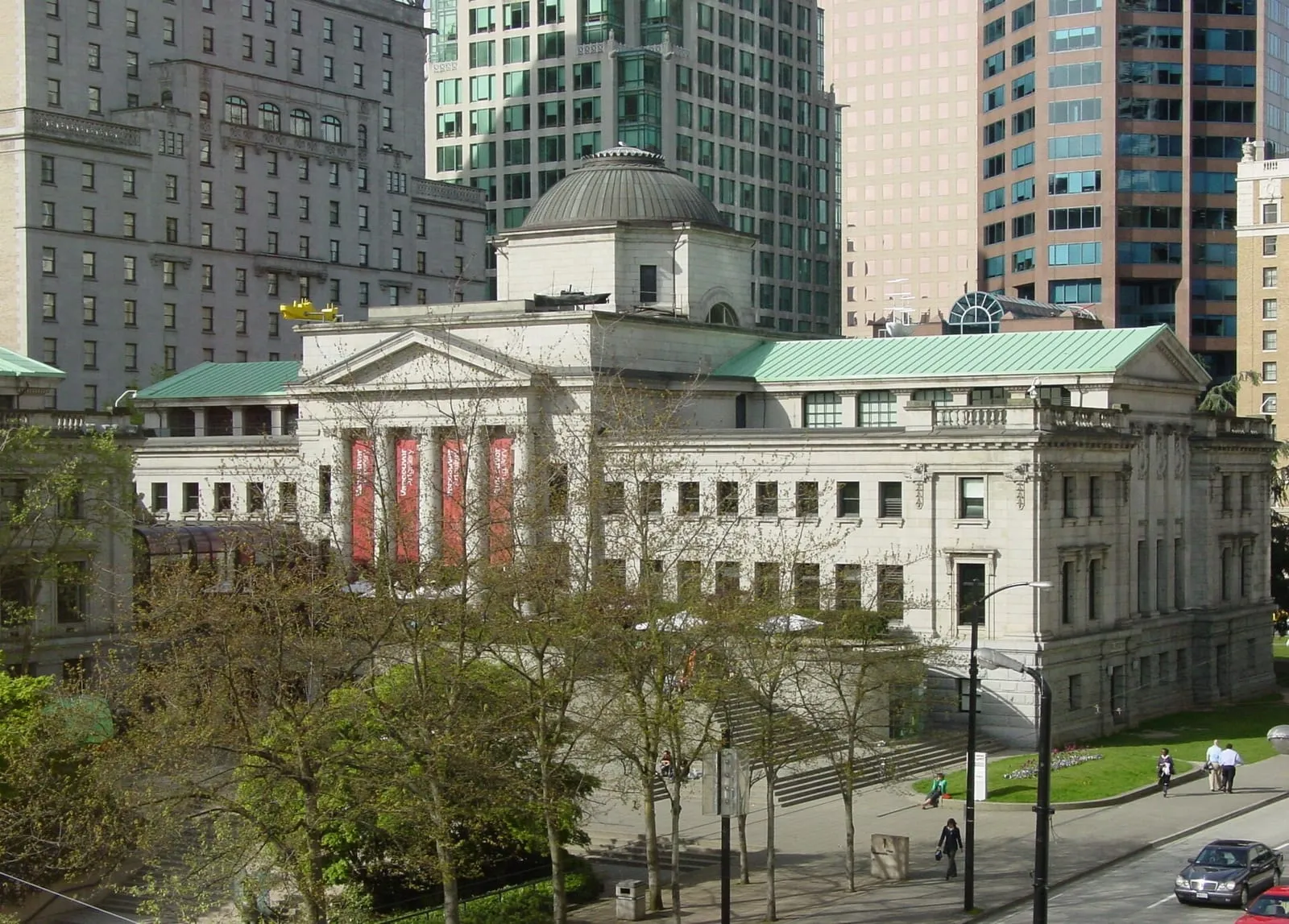
 Street-level entrances on Hornby and Robson bypass the old courthouse steps, with lifts to every floor and free caregiver admission.
Getting around: a network with no gaps to plan around
TransLink states that all 53 SkyTrain stations are accessible, with lifts or ramps from street to platform and level boarding onto the trains. The Canada Line and the Millennium Line's Evergreen extension are the newest and best, but the older Expo Line stations have been retrofitted rather than left behind. Platform-edge gaps are small, and automated trains mean no driver to flag down.
The bus fleet is 100 percent low-floor with front ramps and kneeling suspension, and TransLink operates two securement positions on most buses. Announcements are automated and both audible and visual. Because SkyTrain coverage is genuinely complete, buses here are a supplement rather than a workaround, which is the opposite of the New York situation.
The SeaBus passenger ferry to North Vancouver is fully accessible at both terminals with level boarding, and it is one of the best-value harbour crossings anywhere. Vancouver also has a comparatively large accessible taxi fleet by North American standards, bookable by phone, and HandyDART paratransit for registered users.
The seawall and the outdoors
The seawall is the reason many wheelchair users rate Vancouver so highly. It runs roughly 28 km continuously from Coal Harbour around Stanley Park, along False Creek and out to Spanish Banks, almost entirely paved, almost entirely level, and separated from the cycle path along most of its length. You can spend a full day on it without meeting a step.
Stanley Park's 8.8 km loop is the signature stretch, and the pedestrian side is smooth concrete with accessible washrooms, benches at frequent intervals and blue-zone parking at several points. Travel is counter-clockwise for wheels. The park interior has forest trails that are gravel or root-crossed and are a different proposition, so treat the seawall and the trails as separate decisions.
Beyond the seawall, several beaches have accessible matting and beach wheelchairs in summer, and the city publishes which ones. Grouse Mountain's Skyride gondola is accessible and reaches an alpine viewpoint step-free, which is unusual — most mountain access in the region is not.
Downtown streets and surfaces
Downtown Vancouver is a modern grid of wide concrete sidewalks with kerb ramps at essentially every corner, and the peninsula is flat enough that gradient rarely enters the calculation. The exceptions run north-south towards the harbour, where a few blocks in the West End and around Gastown pitch noticeably, and Gastown itself keeps sections of cobbled and brick paving that vibrate a manual chair badly.
Rain is the practical variable. Vancouver records around 160 wet days a year, most of them between October and April, and painted crossings, wooden boardwalk sections and polished lobby floors all get slick. Drainage is good and standing water is uncommon, but a waterproof lap cover matters more here than a good coat.
Restaurant and shop access downtown is generally good, helped by the age of the building stock, but Gastown and Chinatown have older street-level entrances with a single step and no ramp. Newer developments in Yaletown, Coal Harbour and along Robson Street are consistently level.
Practical planning
A Compass Card works across SkyTrain, bus and SeaBus, and TransLink offers a reduced fare for eligible riders. There is no need to pre-book any part of the fixed-route network. HandyDART is for registered residents, so visitors should plan on the regular system, which is genuinely sufficient here.
Vancouver is a common launch point for Whistler and Vancouver Island, and both add complications the city itself does not have. BC Ferries vessels and terminals are accessible, but the Sea-to-Sky coach services vary by operator, so confirm the specific coach rather than the route. Accessible hotel stock downtown is plentiful; ask for roll-in shower dimensions in centimetres.
When to go for easier access
June to September is dry, mild and long-lit, and the seawall is at its best. October to April brings persistent rain, which is the main obstacle rather than cold — Vancouver winters are wet rather than icy.
Fares, passes and assistance
Published by the operator. Concession rules change, so check before you buy.
- Disabled concession
- HandyCard
- Concession fares
- Residents only — not available to visitors
A photo-identity card for customers who need assistance to use the conventional system; cardholders pay Concession fares on bus, SkyTrain, SeaBus and West Coast Express. It is issued through a TransLink application process. Separately, TransLink publishes a HandyDART visitor application form for people visiting Metro Vancouver.
- Companion travel
- Companion travels free
The attendant of a HandyCard holder travels free on buses, SkyTrain, SeaBus and West Coast Express.
- Booking assistance
- Turn up and go
- How to arrange: Phone TransLink on the day of travel for a SkyTrain or Canada Line attendant
TransLink asks customers who need extra help at SkyTrain or Canada Line stations to call on the day of their trip, at least 10 minutes before arriving at the station, so an attendant can meet them at the fare gates or inside the station.
Good to know
- HandyDART is the TransLink door-to-door service for people who cannot use conventional transit for all trips without assistance. It costs the same as bus, SeaBus and SkyTrain.
- Lightweight transport wheelchairs cannot be properly and safely secured on HandyDART, and mobility devices are subject to size restrictions.
- On SkyTrain, doors marked with a wheelchair symbol on the outside show where to board; wheelchair space is provided inside.
- HandyDART drivers will help customers who cannot tap their Compass Card independently.
Sources: TransLink - Transit accessibility (retrieved August 10, 2026) · TransLink - How to use accessible transit (retrieved August 10, 2026) · TransLink - HandyDART (retrieved August 10, 2026)
Accessibility in Vancouver: common questions
Is Vancouver SkyTrain wheelchair accessible?
Yes, completely. TransLink states that all 53 SkyTrain stations have lift or ramp access from street to platform, with level boarding onto the automated trains. The bus fleet is 100 percent low-floor with ramps and kneeling suspension, and the SeaBus to North Vancouver boards level at both terminals.
Is the Vancouver seawall wheelchair accessible?
Yes. Around 28 km of paved, near-level path runs from Coal Harbour through Stanley Park and False Creek out to Spanish Banks, with the pedestrian side separated from cyclists along most of its length. Accessible washrooms, frequent benches and blue-zone parking sit at intervals. Travel around Stanley Park is counter-clockwise.
What is the hardest part of Vancouver for a wheelchair user?
Rain and older paving rather than terrain. Around 160 wet days a year make painted crossings and boardwalks slippery, and Gastown keeps cobbled and brick sections that shake a manual chair. A few West End blocks pitch towards the harbour. Stanley Park's interior forest trails are gravel and are a separate decision from the seawall.
Can wheelchair users reach the mountains from Vancouver?
Grouse Mountain's Skyride gondola is accessible and delivers an alpine viewpoint step-free, which is rare. Beyond that, confirm each operator individually: BC Ferries terminals and vessels are accessible, but Sea-to-Sky coach services to Whistler vary by company and vehicle.