Tate Modern
Bankside, London · Last verified Jun 2026
A benchmark for level access: ramped entry down the Turbine Hall, generous lifts, quiet hours and a low-stimulus room.
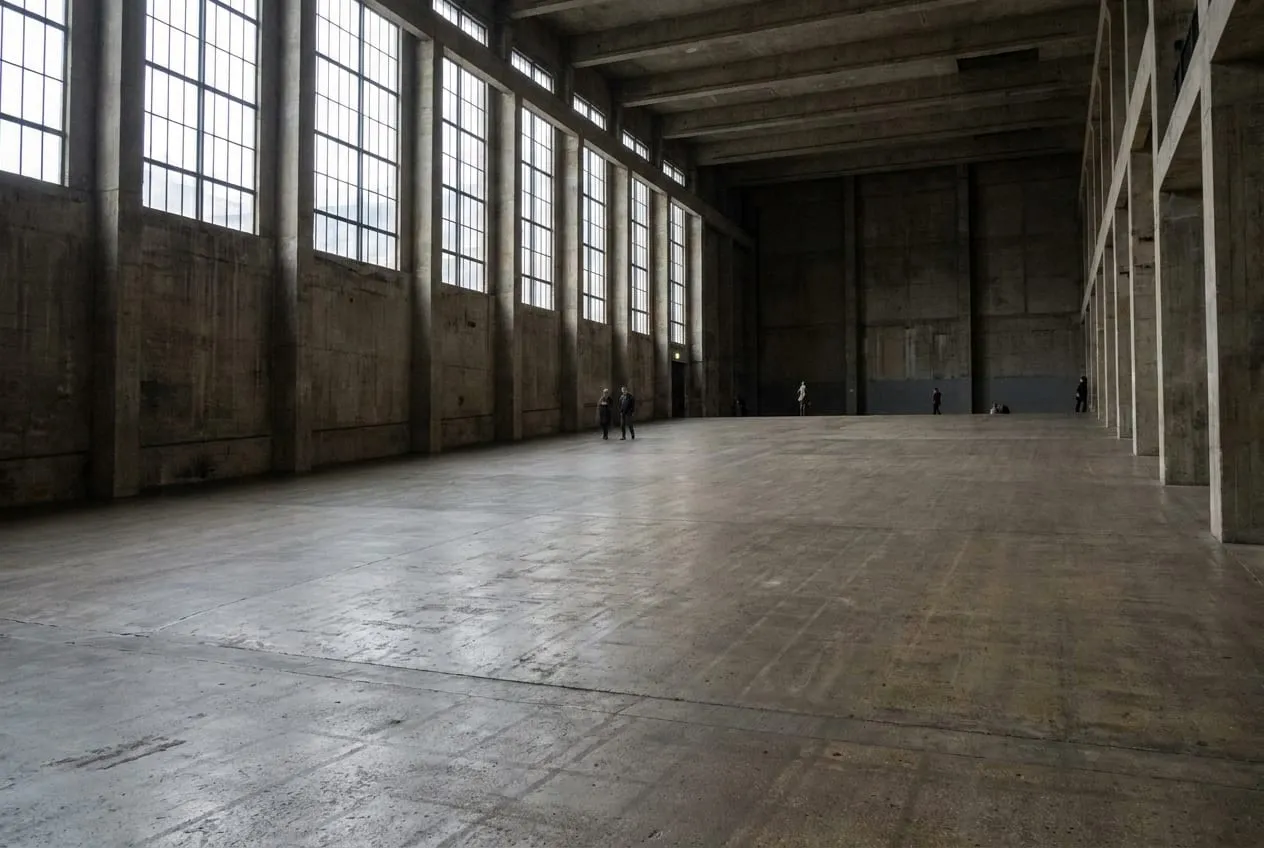
Tate Modern is the museum most often named by wheelchair users as the easiest major building in London, and the reason is structural rather than cosmetic. The gallery occupies a former power station, and the conversion turned the old coal delivery slope into the main public entrance: a broad concrete ramp that carries you from Holland Street straight down into the Turbine Hall without a single step. There is no separate accessible door, no bell to ring and no staff member to find — the accessible route is simply the front door.
Inside, the circulation is as generous as the architecture. Passenger lifts of roughly 160 × 200 cm serve every gallery level, which is large enough for a powerchair plus companion without the awkward reversing that smaller cabins force. Gallery floors are smooth polished concrete with no thresholds between rooms, and the published path widths of around 240 cm mean you can pass other visitors even when a room is busy.
Sensory provision is where Tate has moved furthest beyond the legal minimum. The gallery publishes a sensory map marking the loudest and most crowded spaces, keeps ear defenders at the desks, runs scheduled quiet hours with reduced light and sound, and maintains a low-stimulus room for visitors who need to withdraw. Hearing loops and captioned content are standard rather than on request.
The one thing worth planning is the approach. Southwark and Blackfriars are both step-free and roughly 550-650 m away, and the riverside walk between them is level and smooth. Cross via the Millennium Bridge if you are coming from St Paul's — it is fully level, though it can be very crowded at weekends.
What the measurements mean
The main entrance is step-free. The main door measures 120 cm, which is generous for any wheelchair or mobility scooter. Accessible parking is available on site or immediately adjacent.
The lift cabin is 160 × 200 cm, enough room for a powerchair and a companion together. Its door opening is 110 cm. Internal routes are around 240 cm wide, so two wheelchairs can pass each other.
There is an accessible toilet. Grab bars are fitted. Turning space is about 200 cm, enough for a full turn in most wheelchairs.
Surfaces are smooth & even, which rolls easily. The steepest gradient is around 0%, gentle enough for most users.
The nearest step-free station is Southwark on the Jubilee line, about 650 m away.
Sensory and communication support includes hearing loop, captioning, braille signage, high-contrast signage, sensory map, quiet hours and low-stimulus room.
A companion or carer is admitted free. Assistance animals are welcome. Staff are trained to assist. Seating and rest points are available along the route.
What to expect
- The Turbine Hall entrance on Holland Street is a long, gentle ramp — no steps anywhere on the route in.
- Lifts serve every gallery floor and are unusually large at roughly 160 × 200 cm.
- Free entry for a companion; manual wheelchairs can be borrowed at the cloakroom without booking.
Getting there step-free
Full accessibility profile
Every attribute below is recorded against the same protocol, so figures are comparable between places. Values are marked Measured or Estimate, and the sources are listed above.Entrance & arrival
Elevators & lifts
Accessible restroom
Surfaces & slopes
Getting there
Sensory & communication
Policies & assistance
Practical tips
- Weekday mornings are markedly quieter than weekend afternoons, when lifts queue.
- The Blavatnik building viewing terrace is reached step-free by lift.
- Accessible toilets are on every floor, with turning space around 200 cm.
Practical facilities
Compiled from the venue’s own published accessibility information, not measured by us. Confirm anything critical before you travel.
- Wheelchair loan
- Free
- Booking advised
Wheelchairs and walkers can be reserved free of charge in advance or requested from staff on arrival, subject to availability.
- Disabled admission
- Free for disabled visitors
- Companion free
- Proof required: none
Entry to the collection displays is free for all visitors.
- Accessible toilets
- Count not published
- Changing Places facility
- Changing Places toilet on Level 0 of the Natalie Bell Building, opened with a RADAR key from the Level 0 ticket desk or from staff at the Level 1 South entrance.
The gallery publishes the Changing Places location but not a count of standard accessible toilets.
- Quiet & sensory provision
- Ear defenders available
Ear defenders can be borrowed from the ticket desks on arrival.
- Arrival & parking
- Drop-off: Not published.
- Accessible parking: A small number of accessible parking spaces on site, bookable at least 24 hours ahead.
Parking is booked by emailing ticketing@tate.org.uk or calling +44 (0)20 7887 8888.
Sources: Tate — Accessibility (retrieved August 10, 2026) · Tate Modern — Visit (retrieved August 10, 2026)
Tate Modern: common accessibility questions
Is Tate Modern wheelchair accessible?
Yes, and unusually so. The main Turbine Hall entrance is a long step-free ramp, lifts of about 160 × 200 cm reach every gallery floor, and accessible toilets with roughly 200 cm turning space are on each level. Entry is free, as is entry for a companion.
Does Tate Modern have quiet hours or sensory support?
Yes. Tate publishes a sensory map, provides ear defenders, schedules quiet hours with reduced lighting and sound, and maintains a low-stimulus room. Hearing loops and captioned content are available as standard.
Which step-free station is closest to Tate Modern?
Southwark on the Jubilee line is step-free and about 650 m away; Blackfriars national rail is step-free and about 550 m away. Both approaches are level and smooth along the riverside.