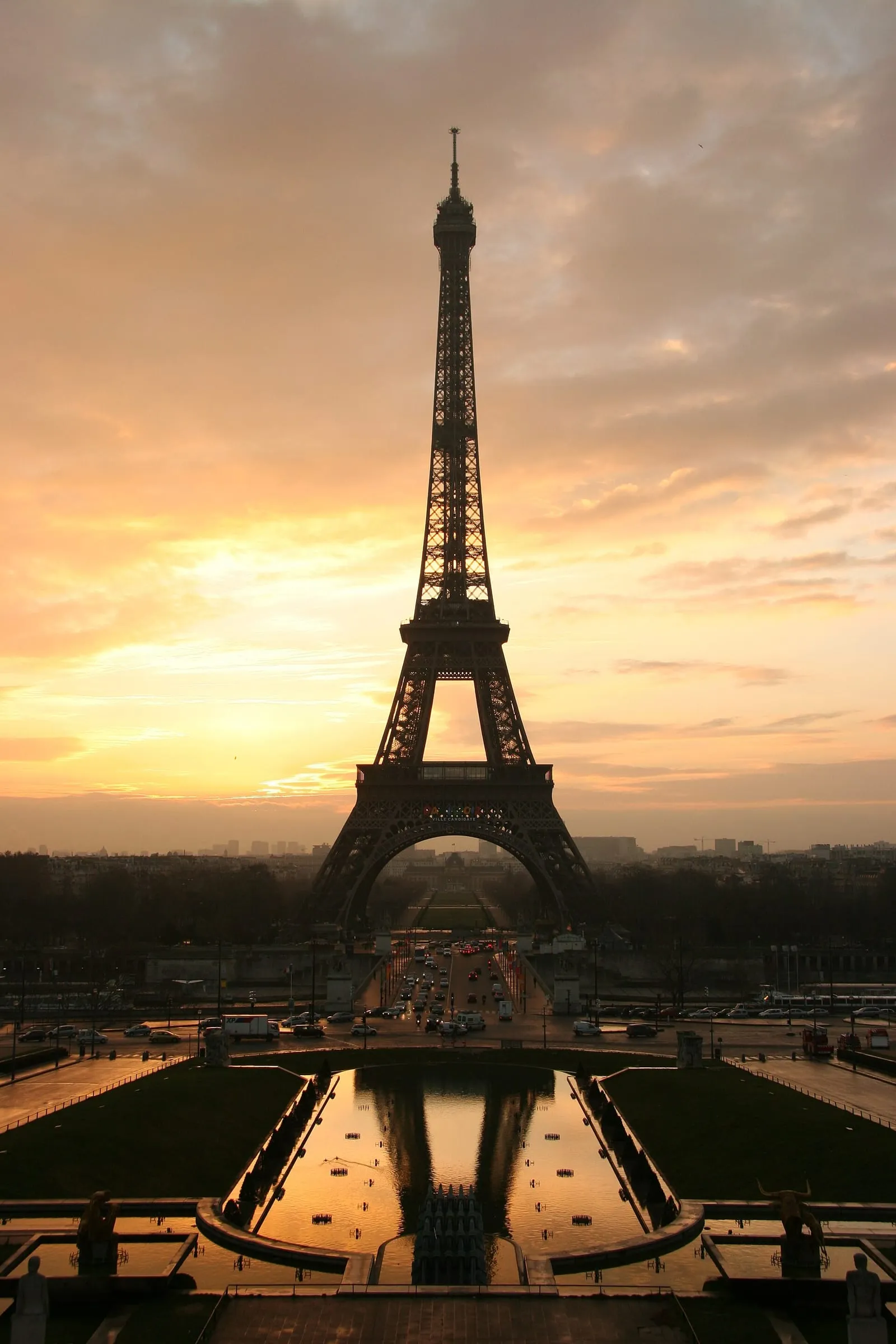
Eiffel Tower
Champ de Mars, Paris · Last verified Jul 2026
Lifts from the north pillar reach the first and second floors, but the summit and every staircase are closed to wheelchair users for evacuation reasons.
Since the esplanade was rebuilt and enclosed, arrival at the Eiffel Tower is more orderly than it used to be. The ground beneath the piers is level paving, security screening has a step-free lane, and the tower's teams meet visitors with disabilities on the esplanade rather than leaving them to find the right queue. Priority access applies both at the ticket desks and at the pillars, which matters more here than at most attractions because the general queues regularly run past an hour.
The lift to use is in the north pillar. It serves the first floor and the second floor, and the operator states that the first floor and the lower level of the second floor are fully accessible to wheelchair users, including the outdoor platform and accessible toilets. The cabins are modest by museum standards, closer to 130 by 160 cm with a door around 90 cm, so a long powerchair plus companion is a tight fit and staff will sometimes load a chair alone with a companion following.
The summit is a flat no, and it is worth being clear about why. Reaching it means 18 steps and then a second lift, and evacuation from the top would require narrow staircases. On that basis the operator refuses the top level to wheelchair users and to visitors using crutches. This is a published safety rule rather than a discretionary judgement, so buy the second-floor lift ticket in the first place: sorting out the wrong ticket at the pillar is slow and not always resolvable.
For arrival, RER C Champ de Mars – Tour Eiffel is the step-free option, with three lifts serving the platforms and the avenue de Suffren exit, about 700 m from the piers. Bir-Hakeim on Line 6 is closer but has no lift. Bus 82 stops within 250 m. The Champ de Mars lawns are compacted gravel and hard going after rain, and the classic Trocadéro viewpoint across the river involves a sustained gradient and steps at the terrace.
What the measurements mean
The main entrance is step-free. The main door measures 110 cm, which is generous for any wheelchair or mobility scooter. Accessible parking is available on site or immediately adjacent.
The lift cabin is 130 × 160 cm, enough room for a powerchair and a companion together. Its door opening is 90 cm. Internal routes are around 200 cm wide, so two wheelchairs can pass each other.
There is an accessible toilet. Grab bars are fitted. Turning space is about 155 cm, enough for a full turn in most wheelchairs.
Surfaces are mixed, so expect some rougher stretches. The steepest gradient is around 4%, gentle enough for most users.
The nearest step-free station is Champ de Mars – Tour Eiffel on the RER C line, about 700 m away. Note that Bir-Hakeim is not step-free, despite being close.
Sensory and communication support includes audio guide and braille signage.
A companion or carer is admitted free. Assistance animals are welcome. Staff are trained to assist. Seating and rest points are available along the route. Booking ahead is advisable to secure accessible entry.
What to expect
- Use the north pillar lift; staff meet visitors with disabilities on the esplanade and give priority at the ticket desks and pillars.
- Buy a second-floor lift ticket, not a summit ticket — the top level is refused to wheelchair users and to visitors on crutches.
- RER C Champ de Mars – Tour Eiffel has three lifts and is the step-free arrival; Bir-Hakeim on Line 6 has none.
Getting there step-free
Full accessibility profile
Every attribute below is recorded against the same protocol, so figures are comparable between places. Values are marked Measured or Estimate, and the sources are listed above.Entrance & arrival
Elevators & lifts
Accessible restroom
Surfaces & slopes
Getting there
Sensory & communication
Policies & assistance
Practical tips
- The reduced disabled rate applies with documentary proof, which must be shown to staff on site.
- The upper level of the second floor is reached by stairs; the lower level is the accessible one.
- The first slots of the day are the least crowded and the fastest for the north pillar lift.
Practical facilities
Compiled from the venue’s own published accessibility information, not measured by us. Confirm anything critical before you travel.
- Disabled admission
- No disabled concession published
- Companion pays
- Proof required: A disability card issued in the visitor own name.
The disabled rate is charged at the child rate and applies to the visitor and to one accompanying person.
- Accessible toilets
- Count not published
- No Changing Places facility published
- Gardens near the East pillar, reached by a wheelchair lift, plus the first and second floors.
Toilets for visitors with reduced mobility are provided on every level open to them; the top level and the stairs are not accessible.
- Arrival & parking
- Drop-off: Not published.
- Accessible parking: Not published.
The West and North pillars on the Seine side give level access to the ticket desks and lift access to the first and second floors.
Sources: Eiffel Tower — Disabled visitors (retrieved August 10, 2026) · Eiffel Tower — Why the top is not accessible to people with reduced mobility (retrieved August 10, 2026)
Eiffel Tower: common accessibility questions
Can wheelchair users go to the top of the Eiffel Tower?
No. The summit and all staircases are closed to wheelchair users and to visitors on crutches for evacuation reasons — reaching the top involves 18 steps and a second lift. The first floor and the lower level of the second floor are fully accessible by the north pillar lift, so book a second-floor ticket.
Is the Eiffel Tower wheelchair accessible at all?
Up to the second floor, yes. The esplanade is level, priority access applies at the ticket desks and pillars, and the north pillar lift reaches the first floor and the lower second floor, both with accessible toilets and outdoor platform access. Lift cabins are small, so expect a snug fit with a companion.
How do wheelchair users get to the Eiffel Tower?
RER C Champ de Mars – Tour Eiffel is the step-free arrival, with three lifts and roughly 700 m of level pavement to the piers. Bir-Hakeim on Métro Line 6 is nearer but has no lift. Bus 82 stops within 250 m and, like the whole Paris fleet, is low-floor with a ramp.