Musée d'Orsay
Saint-Germain, Paris · Last verified Jul 2026
Priority step-free entry at Entrance 2, lifts and ramps to every exhibition level, and roughly 95% of the collection reachable without a step.
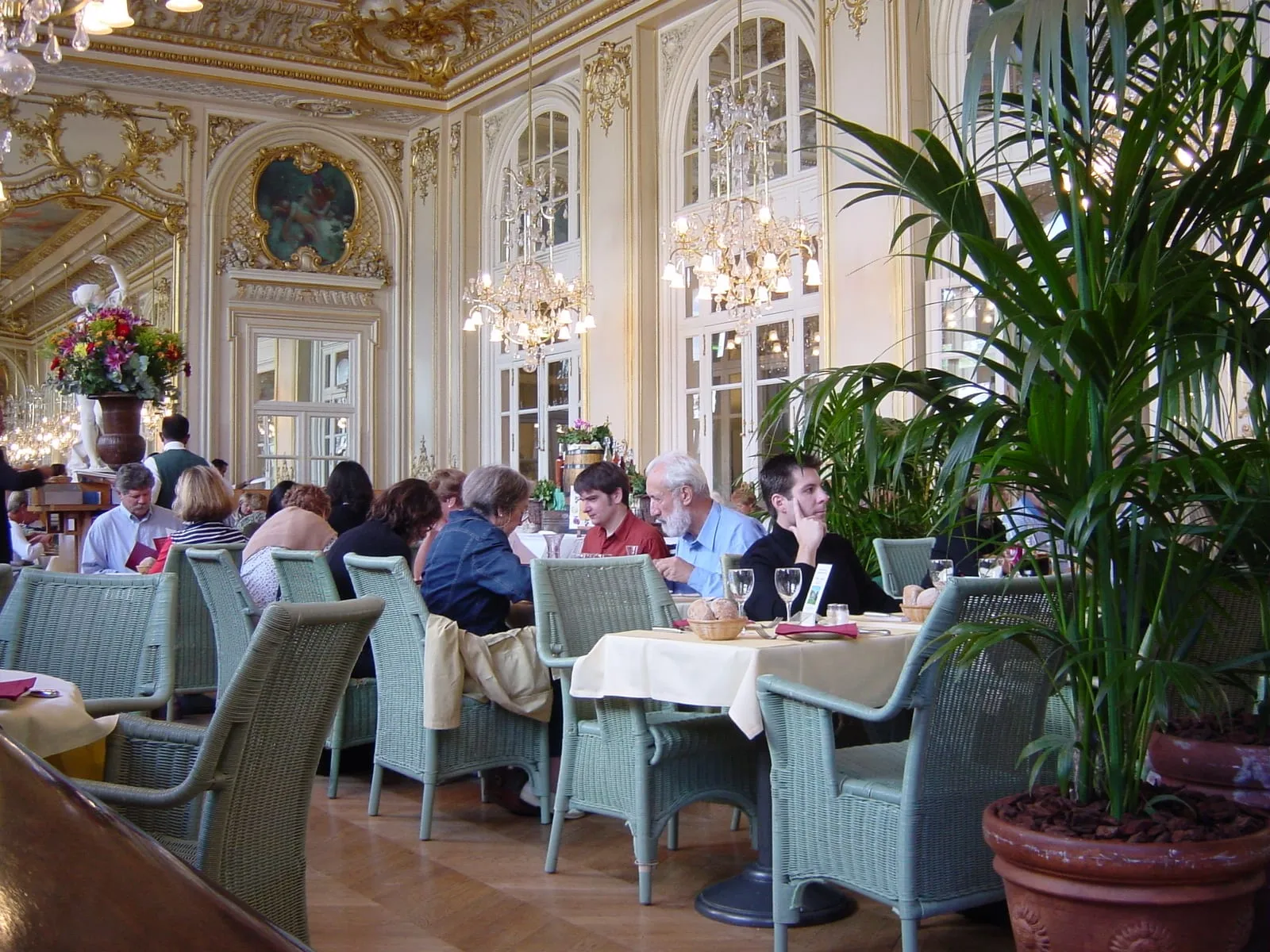
A converted 1900 railway station turns out to be a good shape for accessible museum design. The forecourt on rue de la Légion d'Honneur is level, Entrance 2 is the designated priority door for visitors with disabilities, and behind it the great vaulted nave runs as a single flat floor the length of the building. Automatic doors, access ramps and lifts connect the service spaces, so the café, restaurant, bookshops and shops are all reachable from the same level as the galleries.
Lifts and ramps reach every exhibition level, including the fifth-floor Impressionist rooms where most visitors are heading and where the views out through the clock face are the reward. The museum publishes the useful honest number: around 95% of the display can be seen without going up a step, with the left tower the part that wheelchair users cannot reach. Path widths through the nave are generous, though the upper galleries narrow considerably when a tour group stops in front of a Van Gogh.
Service provision is thorough. Adapted toilets, magnetic induction loops at the reception desks, automatic doors and lifts are all standard, and the cloakroom lends 17 wheelchairs and 8 folding seats free of charge in exchange for ID, without a reservation. A small blue sensory bag containing noise-cancelling headphones, tinted glasses and fidget items is also lent free. Guide dogs and assistance dogs are welcome, and dogs in training are admitted too.
The approach is one of the better ones in Paris. RER C stops at Musée d'Orsay effectively at the door, with lift access to the platforms, though RER C lift coverage varies along the line and is worth confirming for your boarding station. Solférino on Line 12, 400 m away, has no lift. Bus 63 stops outside. Coming from the Louvre, cross by the Pont Royal, which is level; the Passerelle Léopold-Sédar-Senghor includes steps.
What the measurements mean
The main entrance is step-free. The main door measures 130 cm, which is generous for any wheelchair or mobility scooter. There is no dedicated accessible parking, so plan a drop-off instead.
The lift cabin is 150 × 190 cm, enough room for a powerchair and a companion together. Its door opening is 105 cm. Internal routes are around 260 cm wide, so two wheelchairs can pass each other.
There is an accessible toilet. Grab bars are fitted. Turning space is about 180 cm, enough for a full turn in most wheelchairs.
Surfaces are smooth & even, which rolls easily. The steepest gradient is around 2%, gentle enough for most users.
The nearest step-free station is Musée d'Orsay on the RER C line, about 120 m away. Note that Solférino is not step-free, despite being close.
Sensory and communication support includes hearing loop, audio guide, braille signage, high-contrast signage and sensory map.
A companion or carer is admitted free. Assistance animals are welcome. Staff are trained to assist. Seating and rest points are available along the route.
What to expect
- Use Entrance 2 for priority access — no queue, and no steps from the forecourt.
- Seventeen wheelchairs and eight folding stools are lent free at the cloakroom, no booking, ID only.
- The museum states about 95% of the display can be seen step-free; the left tower is the exception for wheelchair users.
Getting there step-free
Full accessibility profile
Every attribute below is recorded against the same protocol, so figures are comparable between places. Values are marked Measured or Estimate, and the sources are listed above.Entrance & arrival
Elevators & lifts
Accessible restroom
Surfaces & slopes
Getting there
Sensory & communication
Policies & assistance
Practical tips
- Free priority admission for a disabled visitor and one companion; no need to queue at the ticket office.
- Thursday late opening is the calmest slot for the fifth-floor Impressionist galleries.
- The sensory blue bag is lent at the cloakroom free of charge alongside wheelchairs and stools.
Practical facilities
Compiled from the venue’s own published accessibility information, not measured by us. Confirm anything critical before you travel.
- Wheelchair loan
- Free
- No booking needed
Wheelchairs, folding seats and walking sticks are lent free of charge at the cloakroom on presentation of proof of identity, or can be requested when booking.
- Disabled admission
- Free for disabled visitors
- Companion free
- Proof required: Valid proof of disability, shown to staff rather than at the ticket office.
Visitors with a disability and one accompanying person of their choice enter free and with priority; no advance booking is needed.
- Arrival & parking
- Drop-off: Not published.
- Accessible parking: Not published.
Visitors with a disability enter with priority via the reserved entrance C.
Sources: Musée d'Orsay — Accessibility services (retrieved August 10, 2026) · Musée d'Orsay — Motor disabilities (retrieved August 10, 2026)
Musée d'Orsay: common accessibility questions
Is the Musée d'Orsay wheelchair accessible?
Yes, and it is one of the strongest profiles in Paris. Entrance 2 gives step-free priority access, lifts and ramps reach every exhibition and service level, and the museum states that about 95% of the display is viewable without a step. The left tower is the part wheelchair users cannot reach.
Can you borrow a wheelchair at the Musée d'Orsay?
Yes. The cloakroom lends 17 wheelchairs and 8 folding stools free of charge on presentation of ID, with no reservation needed. A sensory bag with noise-cancelling headphones and tinted glasses is also available free.
Which station is closest to the Musée d'Orsay for wheelchair users?
RER C stops at Musée d'Orsay about 120 m from the entrance with lift access to the platforms — confirm the lift at your boarding station, as RER C coverage is inconsistent. Solférino on Métro Line 12 is 400 m away and has no lift. Bus 63 stops outside the museum.