Accessible travel in San Francisco
What accessibility actually looks like across 2 of the most-visited places in San Francisco — measured against one consistent protocol, so the figures are comparable.
- 2 places profiled attribute by attribute
- 2 with a step-free main entrance
- 1 with recorded lift dimensions
- 2 with an accessible toilet
- Average accessibility score of 88/100
San Francisco has excellent transit accessibility and terrible topography, and the second fact governs everything. All 50 BART stations have lifts, every Muni bus kneels and ramps, and museums are exemplary. But the city has streets at 31 percent gradient, and the maximum an accessible ramp is allowed to reach under US standards is 8.3 percent. Planning here means choosing corridors, not destinations.
Accessible places in San Francisco
Ranked by accessibility score, which is derived from each recorded profile.
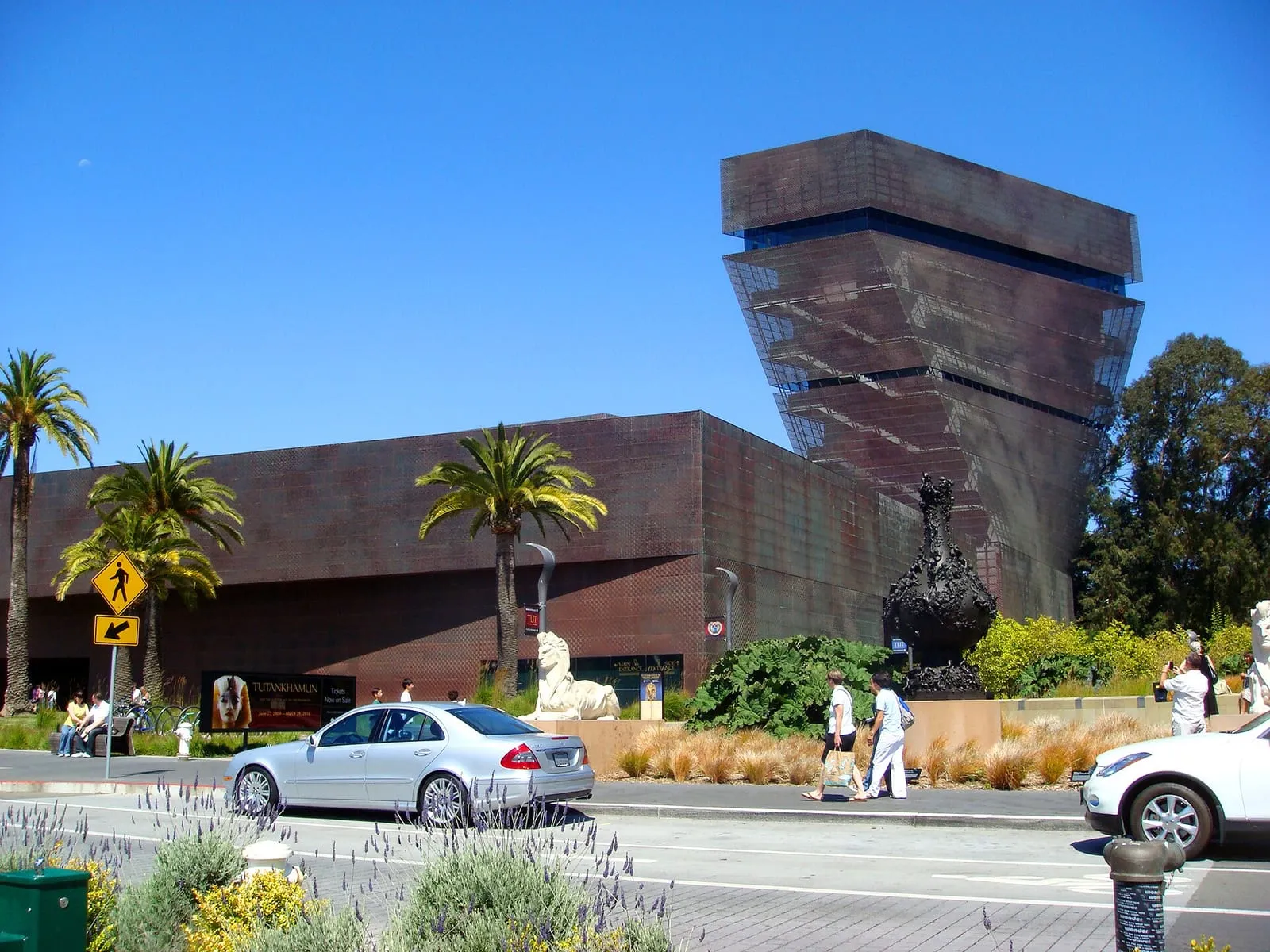 Highly accessible
 Level or ramped entry, lifts to every floor including the free observation tower, and free admission for a disabled visitor plus one guest.
 Accessible
 A flat 4 km park in a vertical city, with a car-free 2.5 km promenade, 96 accessible parking spaces and paratransit allowed on the closed road.
The hills, and the corridors that work
Filbert Street between Hyde and Leavenworth reaches about 31.5 percent. Several blocks on Nob Hill, Russian Hill and Twin Peaks sit above 20 percent. For comparison, a compliant new ramp in the United States tops out at 8.3 percent, and most manual wheelchair users find sustained gradients above 5 percent tiring. A route that crosses two hills is not a harder version of a flat route; it is a different trip.
The flat corridors are real and generous, though. The Embarcadero runs level for about 5 km from Fisherman's Wharf to Oracle Park on smooth wide promenade. Market Street is broadly gentle from the Ferry Building to about Eighth. Golden Gate Park is largely flat along its length, with the car-free JFK Promenade providing 2.5 km of smooth asphalt and kerb cuts at every intersection.
The Mission, SoMa, the Marina and the outer Sunset are all flatland neighbourhoods where you can move freely, and Hayes Valley and the Castro are mostly workable. Chinatown, North Beach and Telegraph Hill are not. Local practice is to use buses to gain altitude and to plan downhill on foot rather than up, and to check a gradient-aware routing app rather than trusting a default walking direction.
Museums and landmarks
The Fine Arts Museums — the de Young in Golden Gate Park and the Legion of Honor above the Pacific — set the local standard, with level or ramped entrances, lifts to all floors, accessible restrooms with changing tables, and standard and wide loaner wheelchairs at the admissions desk. General admission is free for a visitor with a disability plus one guest, though the free guest ticket should be requested a couple of weeks ahead.
SFMOMA, the Exploratorium and the California Academy of Sciences are all purpose-built or recently rebuilt and are step-free throughout, with the Exploratorium in particular designed around tactile and multisensory exhibits that reward a seated visitor. Alcatraz is the notable partial: the ferry and dock are accessible and a shuttle climbs the 40-metre rise to the cellhouse, but parts of the island remain stepped and are documented as such.
Blue-zone parking is comparatively plentiful around the Music Concourse in Golden Gate Park, with 96 accessible spaces at the park's east end including a new lot behind the Bandshell. Paratransit vans are permitted to drive on the otherwise car-free JFK Promenade, which is a small but meaningful piece of policy design. Downtown, the garages serving SFMOMA and Yerba Buena Gardens have lift access to street level and blue-zone bays, which matters more here than in flatter cities.
Practical planning
Out-of-state and international disabled parking placards are recognised in California, which makes driving a reasonable strategy here in a way it rarely is in New York. Blue-zone spaces are free and time-unlimited at metered kerbs. Garages are common downtown, and the flat-corridor approach works well combined with short drives. The pattern locals suggest is to drive or bus to the top of a hill, explore on the level, then descend rather than climb back.
Fog and microclimate matter more than the temperature reading. The Sunset and Richmond districts can sit ten degrees cooler and considerably wetter than the Mission on the same afternoon, and damp brick or painted crossings get slippery. Carry a layer, and expect the Golden Gate Bridge walkway, which is level and step-free, to be windy and loud enough to make conversation hard.
Accessibility in San Francisco: common questions
Is San Francisco wheelchair accessible despite the hills?
Yes, if you plan by corridor. All 50 BART stations have lifts, every Muni bus kneels and ramps, and the Embarcadero, Market Street, the Mission, SoMa and Golden Gate Park are broadly flat. What does not work is improvising a walking route across Nob Hill or Russian Hill, where some blocks exceed 20 percent gradient.
Are San Francisco cable cars wheelchair accessible?
No. The cable cars are historic vehicles with steps to a wooden running board, no ramp and no securement, and there is no accessible version. The F Market heritage streetcar line is the substitute, since part of that fleet is lift-equipped and it runs the Embarcadero waterfront on level ground.
What is the steepest street problem for wheelchair users in San Francisco?
Filbert Street reaches about 31.5 percent, and numerous Nob Hill, Russian Hill and Twin Peaks blocks exceed 20 percent, against a legal maximum of 8.3 percent for new ramps. Use buses to gain altitude, plan descents rather than climbs, and route with a gradient-aware app instead of default walking directions.
Do disabled parking placards from other states work in San Francisco?
Yes. California recognises out-of-state and international disabled placards, and blue-zone spaces are free with no time limit at metered kerbs. Golden Gate Park has 96 accessible spaces at its east end, including a lot behind the Bandshell with kerb ramps and accessible paths.