teamLab Planets TOKYO
Toyosu, Tokyo · Last verified Jul 2026
A barefoot, water-based digital art museum with a defined wheelchair route — but several rooms can only be viewed from a distance, and one cannot be reached at all.
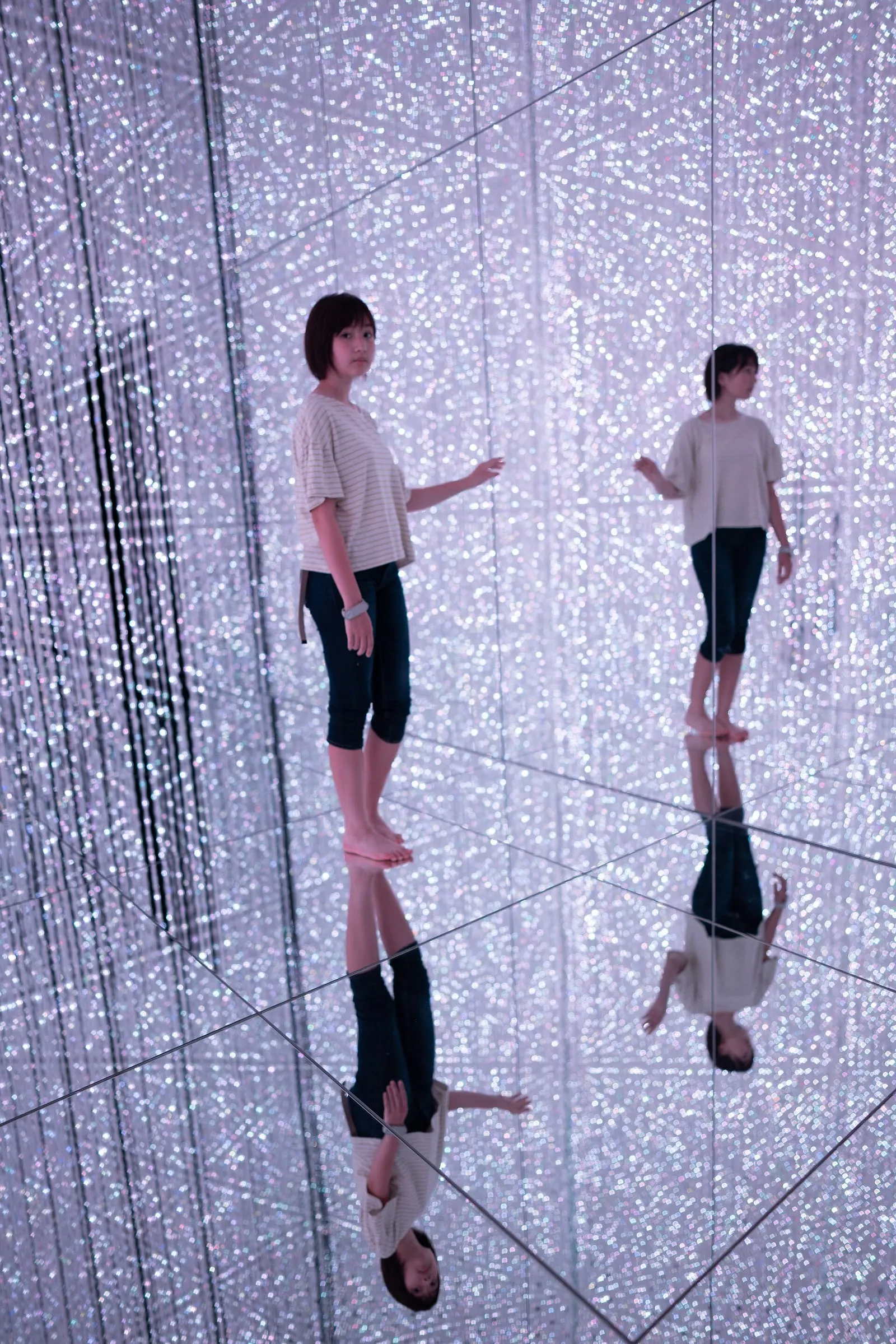
teamLab Planets is the rare venue where the concept itself limits access, and the operator says so plainly. The museum is designed to be walked barefoot, with visitors wading through knee-deep water and across soft, uneven and mirrored floors. Staff brief every wheelchair user individually before entry and set out which route applies, which artworks can be entered, and which can only be seen from a designated viewing position. That briefing is the real access document; nothing published covers every case.
The concrete constraints are specific. Personal wheelchairs are allowed but need tire covers fitted, and you may be asked to move to a house chair for safety. Two water works — "Drawing on the Water Surface Created by the Dance of Koi and People" and "Ephemeral Crystallized Light" — require a transfer to a dedicated water wheelchair, and staff are not permitted to push chairs inside the artworks. One work, "Waterfall of Light Particles at the Top of an Incline", cannot be accessed by wheelchair users at all.
A further group of rooms is viewable only from marked areas rather than entered: the Caterpillar House spheres, Multi Jumping Universe, the aerial climbing net, the stepping stones, Graffiti Nature and the fruit-field slide. Several mirrored-floor works also carry a 250 kg combined weight limit. Taken together, a wheelchair visitor sees most of the museum but experiences a meaningfully reduced version of it, which is why we rate this partial rather than accessible.
The surrounding logistics are straightforward. Shin-Toyosu station on the Yurikamome line is step-free and about 100 m away, Toyosu on the Yurakucho line is step-free at roughly 900 m, and the building has level entry, accessible toilets and free rental shorts in sizes XS to 6L for the water sections. There is no on-site accessible parking, no sensory map and no quiet session, and the museum is loud, dark and highly stimulating throughout — worth weighing carefully if sensory load is a concern.
What the measurements mean
The main entrance is step-free. The main door measures 110 cm, which is generous for any wheelchair or mobility scooter. There is no dedicated accessible parking, so plan a drop-off instead.
Internal routes are around 150 cm wide, which allows single-file passing at busy moments.
There is an accessible toilet. Grab bars are fitted. Turning space is about 170 cm, enough for a full turn in most wheelchairs.
Surfaces are mixed, so expect some rougher stretches. The steepest gradient reaches about 8%, which is noticeable in a manual chair.
The nearest step-free station is Shin-Toyosu on the Yurikamome line, about 100 m away.
A companion or carer is admitted free. Assistance animals are welcome. Staff are trained to assist. Seating is limited, which matters if standing or queuing is difficult. Booking ahead is advisable to secure accessible entry.
What to expect
- Own wheelchairs need tire covers fitted, and you may be asked to transfer to a venue chair.
- Water rooms require a transfer to a special water wheelchair, and staff cannot push you inside the artworks.
- "Waterfall of Light Particles at the Top of an Incline" is not accessible to wheelchair users at all.
Getting there step-free
Full accessibility profile
Every attribute below is recorded against the same protocol, so figures are comparable between places. Values are marked Measured or Estimate, and the sources are listed above.Entrance & arrival
Accessible restroom
Surfaces & slopes
Getting there
Sensory & communication
Policies & assistance
Practical tips
- Tickets are timed and sell out; a disability discount covers the visitor and one caregiver on presentation of a certificate.
- Lockers are provided and you go barefoot from the changing area onward, socks and tights removed.
- Seating inside is minimal by design, so factor in standing or sitting time if fatigue is a concern.
teamLab Planets TOKYO: common accessibility questions
Is teamLab Planets wheelchair accessible?
Partly. Entry is level and staff set out a specific wheelchair route, but one artwork cannot be accessed at all, two water works need a transfer to a dedicated water wheelchair, and around seven more can only be viewed from marked positions. Own chairs require tire covers, and you may be asked to use a venue wheelchair.
Do you have to go barefoot at teamLab Planets in a wheelchair?
The museum is designed to be experienced barefoot and visitors remove socks and tights before the water areas. Wheelchair users follow an adapted route, and for the two water artworks that means transferring to a special water wheelchair. Staff explain the arrangements at the entrance before you go in.
Is teamLab Planets suitable for sensory sensitivity?
Approach with caution. The spaces are deliberately dark, loud, mirrored and disorienting, with water, shifting light and crowds throughout. There is no published sensory map, no quiet session and no low-stimulus room. Weekday first entry slots are the least crowded option if you want to try it.